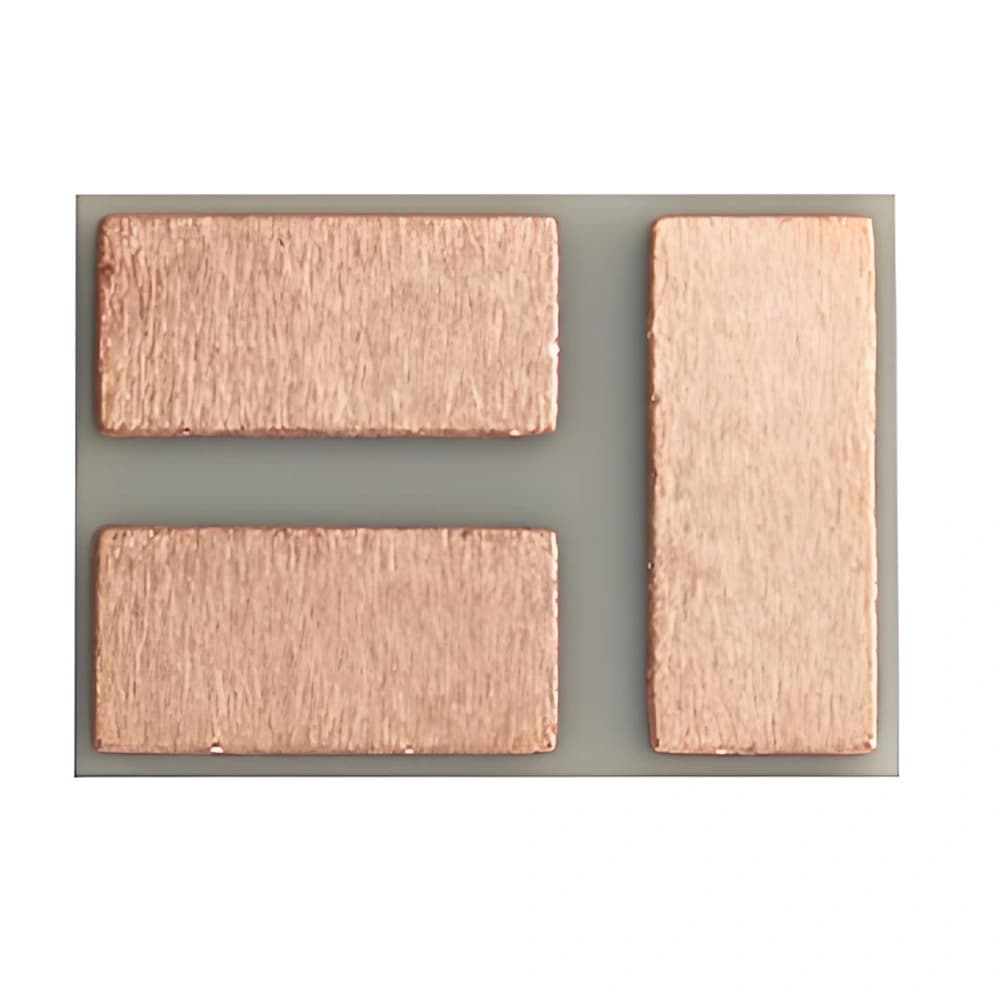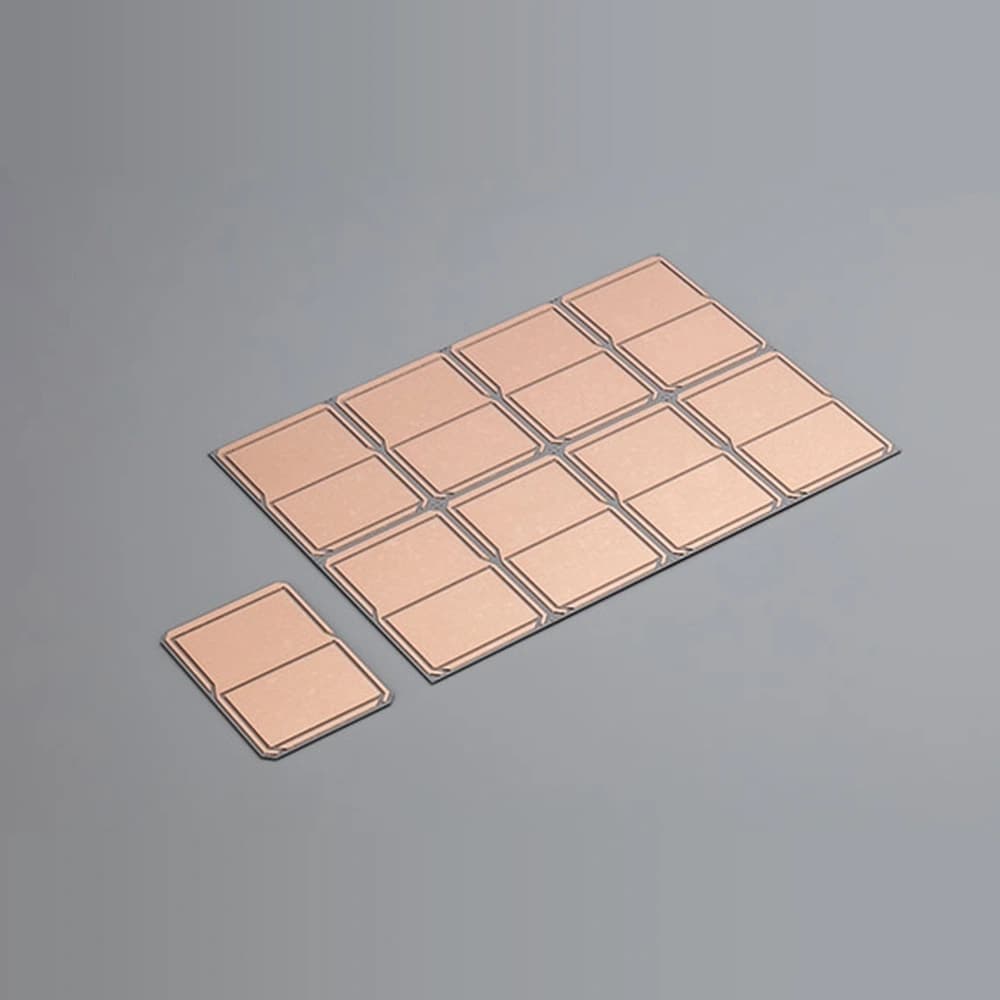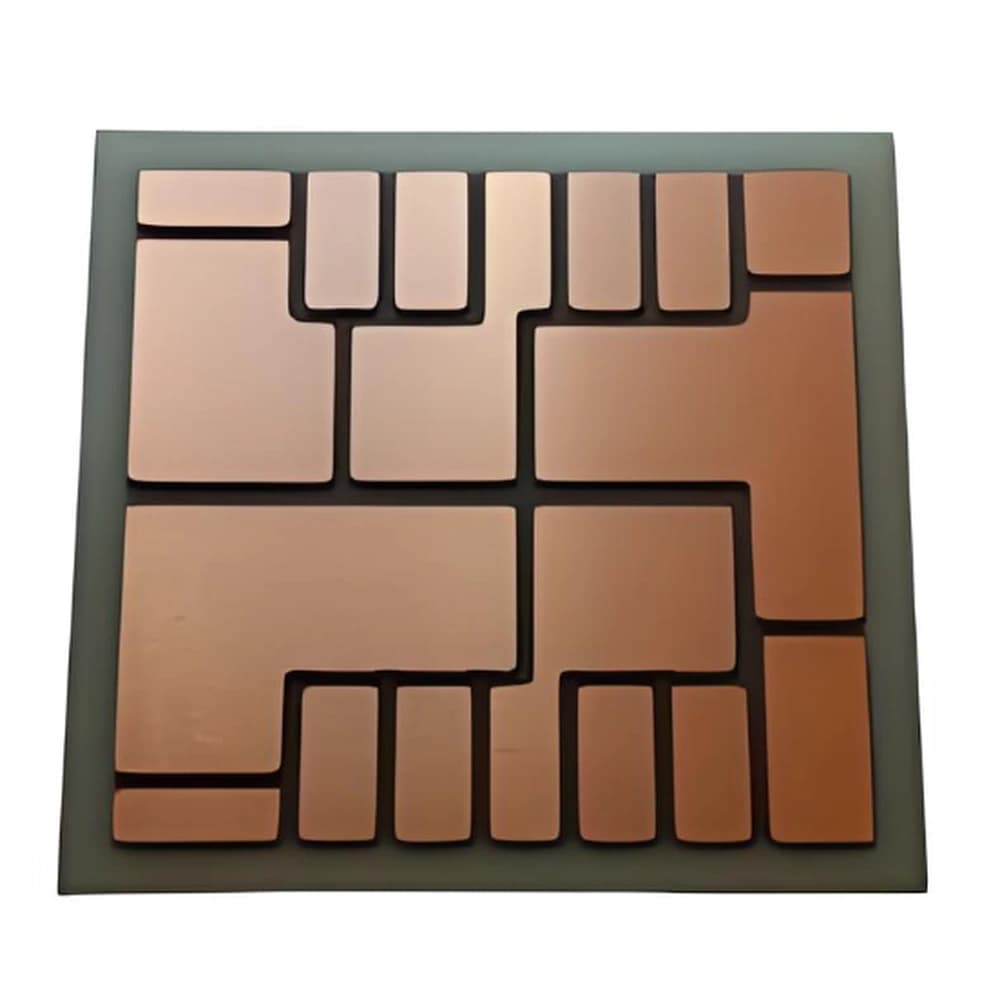
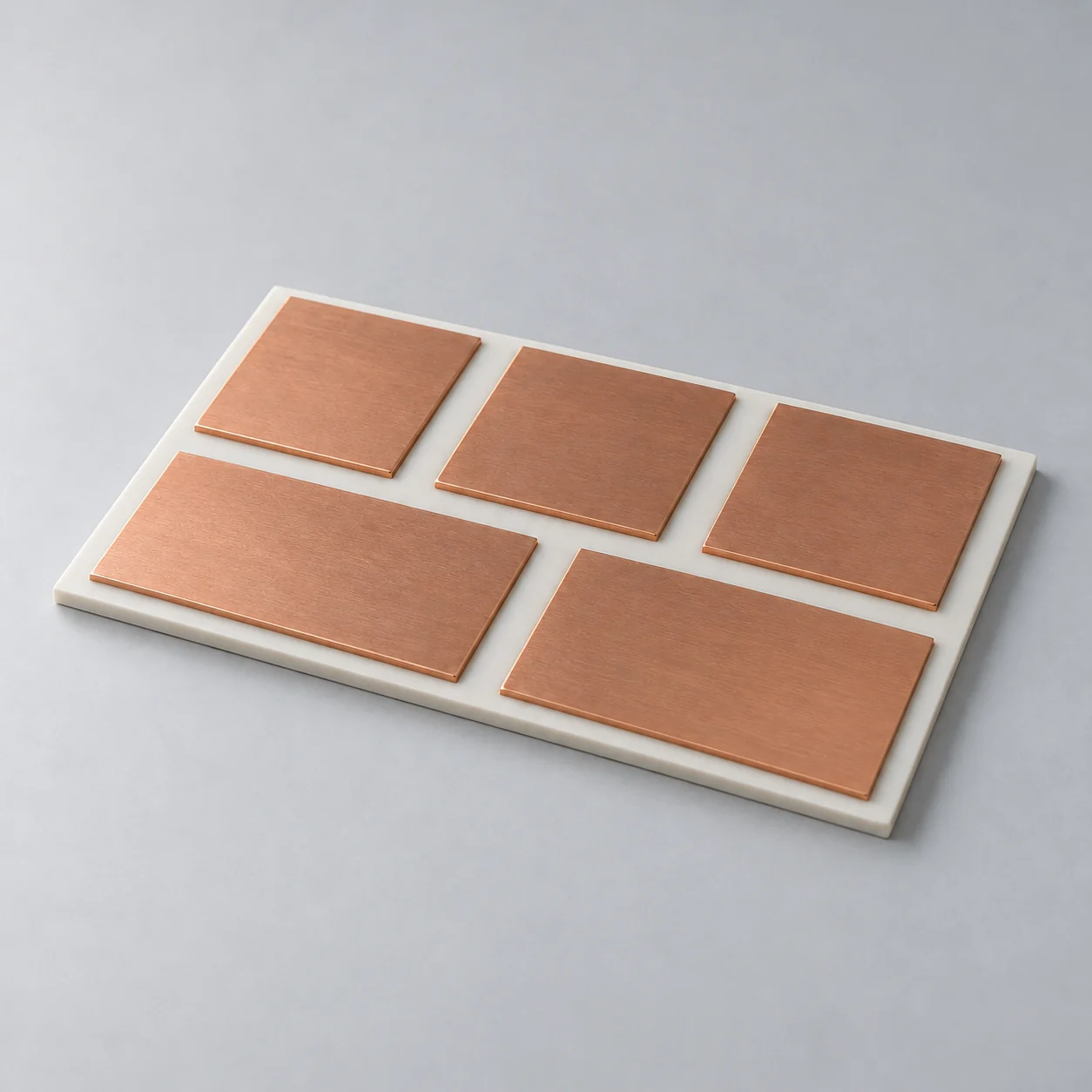
Alumina AMB Copper-Clad Substrates
Ceramic Substrate
SKU: FWM/CS-AMB-005
- Material
- Alumina (Al2O3) / Copper
- Size
- Custom sizes by drawing
- MOQ
- 5 pieces or one master-card equivalent
- Applications
- Industrial Power Modules
Alumina-based AMB copper-clad substrates for selected power-electronics layouts subject to ceramic and braze-system review.
Browse Products
Alumina Ceramic Products
Zirconia Ceramic Products
Silicon Carbide Products
Silicon Nitride Products
Aluminum Nitride Products
Product Description

Alumina AMB substrates join copper to an electrically insulating alumina ceramic using an active-metal braze system.
The active-metal braze joins copper to the selected alumina ceramic. Copper forms the circuit and attachment surfaces, while the ceramic provides mechanical support and electrical isolation. This construction has its own braze compatibility and qualification requirements; Si3N4 AMB reliability results do not transfer to it.
Alumina-based AMB is shown as a reference configuration. Confirm ceramic grade, braze compatibility and qualification requirements before specifying this route.
Product Advantages
- Active metal brazing joins copper conductors to an insulating alumina carrier.
- Copper layers provide current paths and device-attachment areas on the ceramic.
- An alumina-based construction offers a distinct ceramic and braze selection within the AMB route.
Typical Applications
- Industrial Power Modules: alumina AMB carriers combine copper conductors with electrical isolation.
- Power Electronics: patterned copper provides attachment and interconnection areas on ceramic.
Technical Data
96% Alumina Substrate (708 S) Properties
| Property | 96% Al₂O₃ — 708 S | Test conditions / measurement tolerance ±10% |
|---|---|---|
| Density (g/cm³) | ≥3.75 | DIN EN 993-1 |
| Bending strength, σ₀ (MPa) | ≥500 | — |
| Young’s modulus (GPa) | ≥300 | — |
| Thermal conductivity (W/(m·K)) | 24 | Room temperature; DIN EN 821-2 |
| Linear thermal expansion coefficient (10⁻⁶/K) | 7–9 | 100–800°C; DIN 51045-1 |
| Specific heat capacity (J/(g·K)) | ≥0.75 | 20°C; DIN EN 821-3 method B |
| Relative permittivity | ~9.8 | Room temperature, 1 MHz; Ra ≤0.4 µm |
| Dielectric loss factor | ≤0.005 | Room temperature; 1 MHz; Ra ≤0.4 µm |
| Volume resistivity (Ω·cm) | ≥10¹⁴ | Room temperature; IEC 62631-3 |
| Breakdown strength (kV/mm) | AC≥15; DC≥15 | 20°C; AC / DC |
| Fracture toughness (MPa·m½) | ≥3.0 | Indentation-fracture (IF) |
99.6% Alumina Substrate (710 C) Properties
| Property | 99.6% Al₂O₃ — 710 C | Test conditions / measurement tolerance ±10% |
|---|---|---|
| Density (g/cm³) | ≥3.80 | DIN EN 993-1 |
| Bending strength, σ₀ (MPa) | ≥420 | ASTM C1499-08 |
| Young’s modulus (GPa) | ≥300 | — |
| Thermal conductivity (W/(m·K)) | ≥25 | Room temperature; DIN EN 821-2 |
| Linear thermal expansion coefficient (10⁻⁶/K) | 7–9 | 100–800°C; DIN 51045-1 |
| Specific heat capacity (J/(g·K)) | ≥0.65 | 20°C; DIN EN 821-3 method B |
| Relative permittivity | 8.5–11.5 | Room temperature, 1 MHz |
| Dielectric loss factor | ≤0.010 | Room temperature; 1 MHz; Ra ≤0.4 µm |
| Volume resistivity (Ω·cm) | ≥10¹⁴ | Room temperature; IEC 62631-3 |
| Breakdown strength (kV/mm) | AC≥15; DC≥15 | 20°C; AC / DC |
| Fracture toughness (MPa·m½) | ≥3.0 | Indentation-fracture (IF) |
Typical Construction Parameters
| Construction item | Typical configuration | Applicable condition |
|---|---|---|
| Ceramic base | Alumina (Al2O3) | Grade and braze-system compatibility |
| Ceramic thickness | Confirmed from the drawing | Alumina grade, size and process dependent |
| Copper thickness | Defined with the alumina / braze stack | Alumina-specific bonding and thermal-cycle qualification |
| Pattern | Custom power circuit | Drawing review required |
| Surface finish | Bare Cu and selected plated finishes | Assembly-process dependent |
How to Read the Parameters
- Bond strength
Peel force per width in N/mm differs from bond stress in MPa.
Specify: Test mode, fixture, specimen, rate and failure location.
- Thermal conductivity
A stated ceramic value is not an effective AMB-stack conductivity.
Specify: Ceramic grade, temperature and method.
- Thermal cycling
A cycle count applies only to its defined construction and profile.
Specify: Endpoints, dwell, ramp/transfer, samples, inspection and failure criteria.
- Layer and panel dimensions
Available combinations cannot be inferred from separate maximum values.
Specify: Complete stack, usable circuit area, outline and finished shape.
AMB: ceramic, braze and copper as one construction
AMB joins copper and ceramic through an active braze system whose reactive elements enable bonding at the ceramic interface. Ceramic grade, braze and copper geometry must be assessed together; generic AMB principles do not establish any one product’s numerical capability.

Application Conditions & Design Review
Assess the alumina-based option on its own merits
Alumina AMB is a design-review option where its thermal and mechanical balance fits the application. It should not inherit the qualification claims of a Si3N4 or AlN AMB construction.
Make the braze system explicit
Confirm the compatible ceramic/braze/copper combination and the purpose of choosing AMB instead of another copper-bonding route. Compare actual stack requirements, not a universal technology ranking.
Ceramic choice
Si3N4, AlN and selected alumina configurations address different thermal and mechanical priorities.
Copper distribution
Layer thickness and copper coverage influence current paths, heat spreading and thermomechanical stress.
Mission profile
Define operating temperatures and loading before choosing substrate and assembly qualification tests.
Send With Your Drawing
- Alumina grade, ceramic thickness and copper configuration.
- Required braze-system compatibility, surface finish and assembly process.
- Thermal load, isolation requirement and reliability acceptance conditions.
Include the drawing revision, sample and production quantities, and required inspection documents.
Define Acceptance Before Production
- Verify the specified stack and drawing-defined metal/ceramic geometry.
- Agree interface-integrity and electrical checks for this alumina-based construction.
Agree the test methods, sampling plan, acceptance limits and required reports before production.
Available Forms & Processing
Product-specific geometry and processing features.
- Selected alumina grade with its matching copper and active-metal-braze system.
- Ceramic thickness, copper thickness and pattern coverage defined for the selected construction.
- Thermal-cycle and bond evaluation associated with the alumina stack rather than a Si3N4 design.
Engineering Questions
Is alumina AMB always better than alumina DBC?
No. The best choice depends on the bonding system, layout, thermal requirements, qualification and cost. Compare the actual constructions and their test evidence.
Is the active braze the same as component-attach solder?
No. The active braze is part of the ceramic-to-copper joining system. Die-attach solder or sinter material belongs to a later assembly interface.
Can one AMB product’s cycle result be used for another stack?
Not without evidence. Ceramic grade, braze, copper geometry, layer thicknesses and the test profile must be comparable.
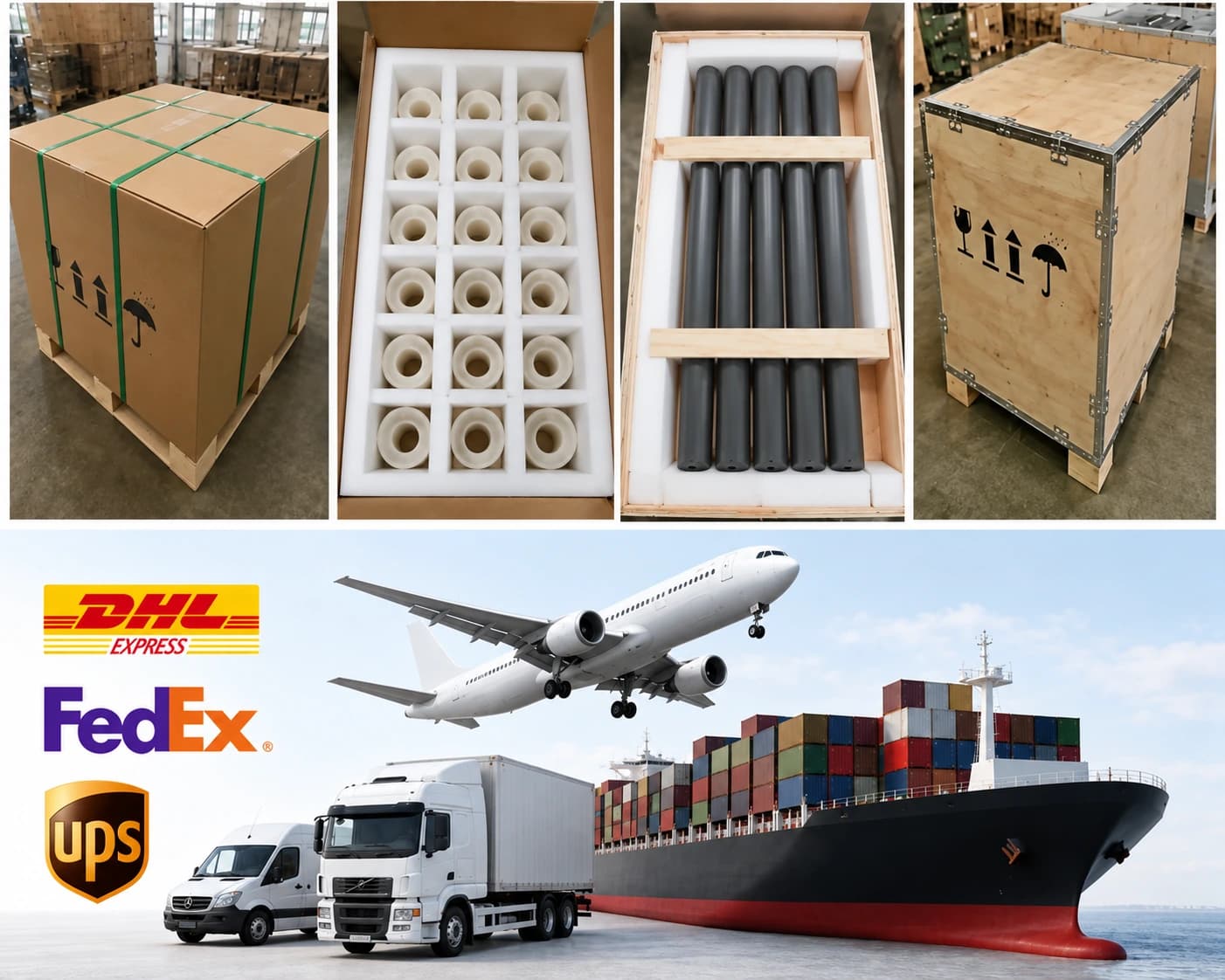
Packaging & Shipping
Packaging is selected for master cards, individual units and copper surface condition.
| Item | Details |
|---|---|
| Packaging approach | Packaging is selected for master cards, individual units and copper surface condition. |
| Protection methods | Individual separation; Anti-scratch surface protection; Rigid trays or master-card frames; Copper corrosion protection where appropriate; Inner box and export carton; Wooden case when required |
| MOQ reference | 5 pieces or one master-card equivalent |
| Lead-time references | AMB: 6-10 weeks |
| Payment terms | T/T / Western Union / PayPal; 50% advance payment, 50% balance before shipment |
| Shipping methods | Sea freight / Air freight / Door-to-door courier |
Related Ceramic Substrate Products
Compare related ceramic substrate materials and metallization routes within the same product family.