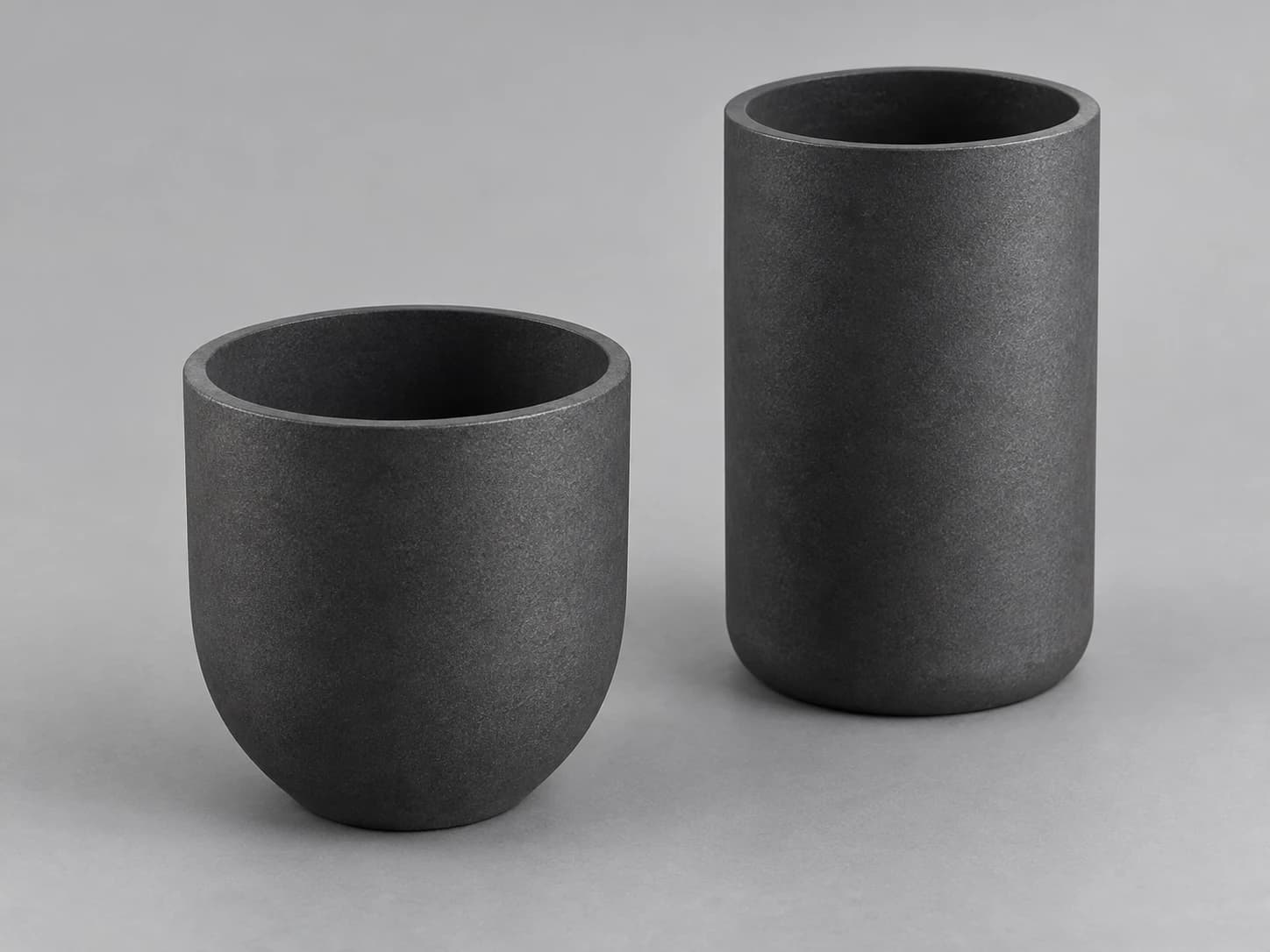
Silicon Carbide Crucibles
We produce silicon carbide–graphite crucibles for non-ferrous metal melting and holding, with standard and custom forms matched to the alloy, working capacity and furnace.
View product
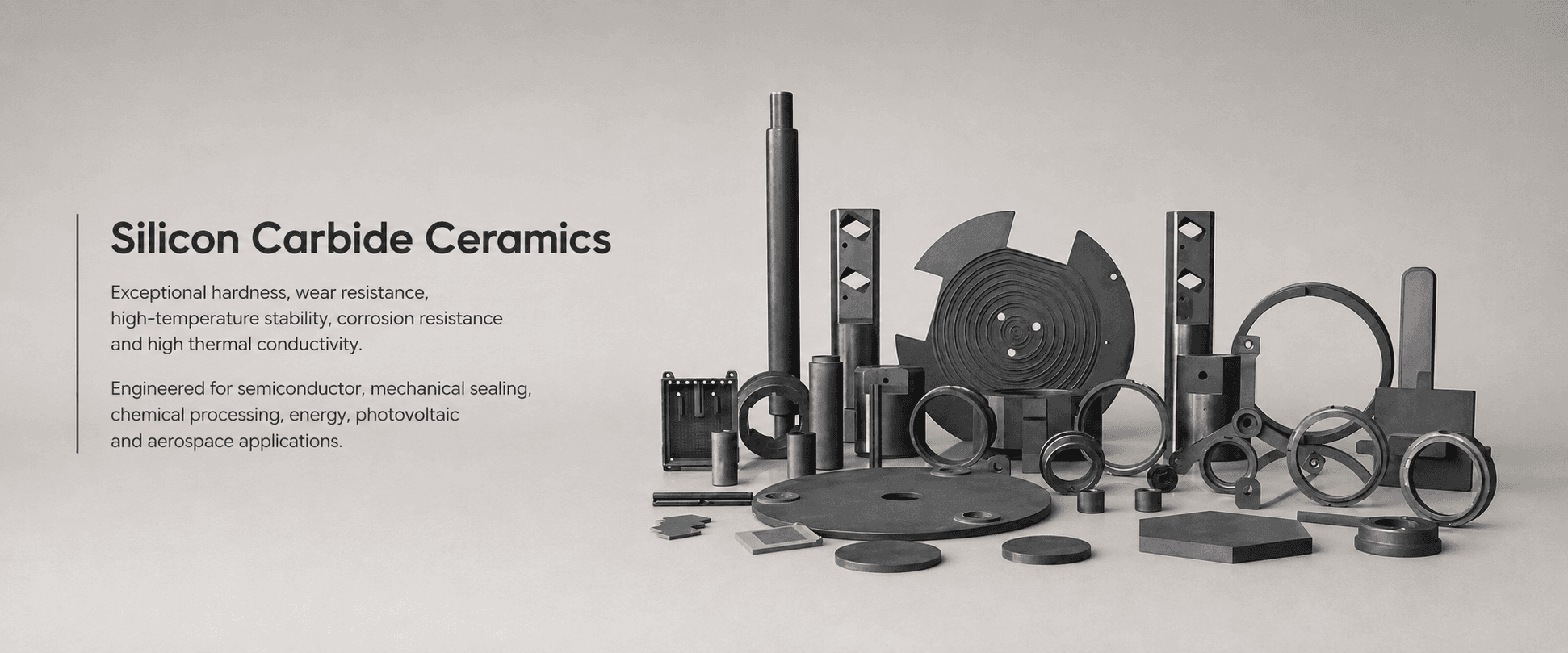
Product Family
Silicon Carbide Components for Wear, Sealing and Thermal Applications
Choose a silicon carbide product by its role: sealing and sliding contact, abrasive-process wear, thermal equipment or precision handling. This catalogue covers ceramic equipment parts, not SiC semiconductor chips. Select the component form below, then share the drawing and operating conditions so material route and supply feasibility can be reviewed.
Silicon carbide components are selected for combinations of wear resistance, heat transfer and chemical compatibility. The material route and component geometry should be reviewed together.
Dense sintered SiC, reaction-bonded SiC and porous kiln-furniture grades have different phase compositions and properties. Specify the medium, atmosphere, full temperature cycle, mechanical loading and drawing requirements rather than selecting from a single maximum temperature.
SiC-containing foundry crucibles can include graphite and a bonding phase. They are a separate construction category from dense engineering SiC tubes, seals and plates; the material examples below are not crucible specifications.
Typical properties by material route.
| Grade / Variant | Composition / Type | Key Characteristics | Typical Applications |
|---|---|---|---|
| RBSiC / SiSiC | Reaction-bonded SiC with a residual silicon phase | Reaction-bonded SiC with a residual silicon phaseDensity (g/cm³): ≥3.03; Apparent porosity (%): <0.2; Vickers hardness (HV0.5): 2000 (0.5 kgf test force); Young’s modulus (GPa): 350; Fracture toughness (MPa·m¹/²): 2.5–3.5; Flexural strength (MPa): ≥350 (25°C); Compressive strength (MPa): ≥2000 (25°C); Thermal conductivity (W/(m·K)): ≥90 (25°C); Mean linear thermal expansion coefficient (10⁻⁶/K): 4.0 (25–1000°C); Typical maximum material temperature (°C): 1300 | Drawing-defined wear, nozzle and thermal components |
| SSiC | Pressureless-sintered dense SiC | Pressureless-sintered dense SiCDensity (g/cm³): ≥3.12; Apparent porosity (%): <0.2; Vickers hardness (HV0.5): 2100 (0.5 kgf test force); Young’s modulus (GPa): 400; Fracture toughness (MPa·m¹/²): 4–5; Flexural strength (MPa): ≥400 (25°C); Compressive strength (MPa): ≥2200 (25°C); Thermal conductivity (W/(m·K)): ≥110 (25°C); Mean linear thermal expansion coefficient (10⁻⁶/K): 4.0 (25–1000°C); Typical maximum material temperature (°C): 1650 | Sealing, wear and chemical-process components |
| RSiC | Recrystallized porous SiC | Recrystallized porous SiCSiC content (%): >99; Si₃N₄ content (%): —; Bulk density (g/cm³): 2.7; Open porosity (%): 15; Modulus of rupture (MPa): 90 (Room temperature); Thermal conductivity (W/(m·K)): 25; Mean linear thermal expansion coefficient (10⁻⁶/K): 4.8 (20–1000°C); Typical maximum material temperature (°C): 1650 | Kiln supports and thermal-processing components |
| Fine NBSiC | Fine nitride-bonded porous SiC | Fine nitride-bonded porous SiCSiC content (%): 75; Si₃N₄ content (%): 25; Bulk density (g/cm³): 2.8; Open porosity (%): 13; Modulus of rupture (MPa): 160 (Room temperature); Thermal conductivity (W/(m·K)): 15; Mean linear thermal expansion coefficient (10⁻⁶/K): 4.7 (20–1000°C); Typical maximum material temperature (°C): 1450 | Selected kiln-furniture and thermal-processing components |
We produce silicon carbide–graphite crucibles for non-ferrous metal melting and holding, with standard and custom forms matched to the alloy, working capacity and furnace.
View product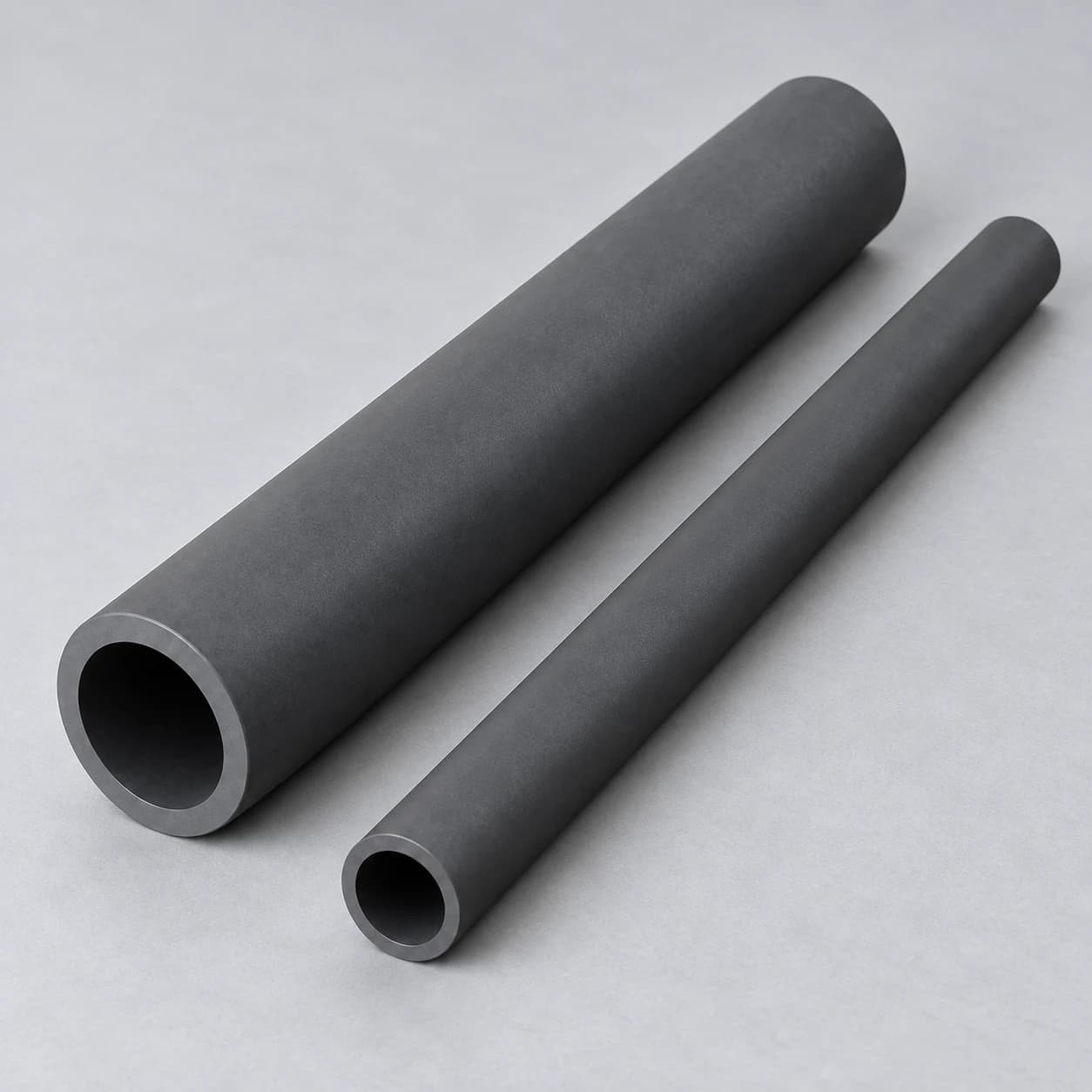
Silicon carbide ceramic tubes provide hard, corrosion-resistant passages and protective barriers for chemical processing, heat exchange and thermal equipment.
View product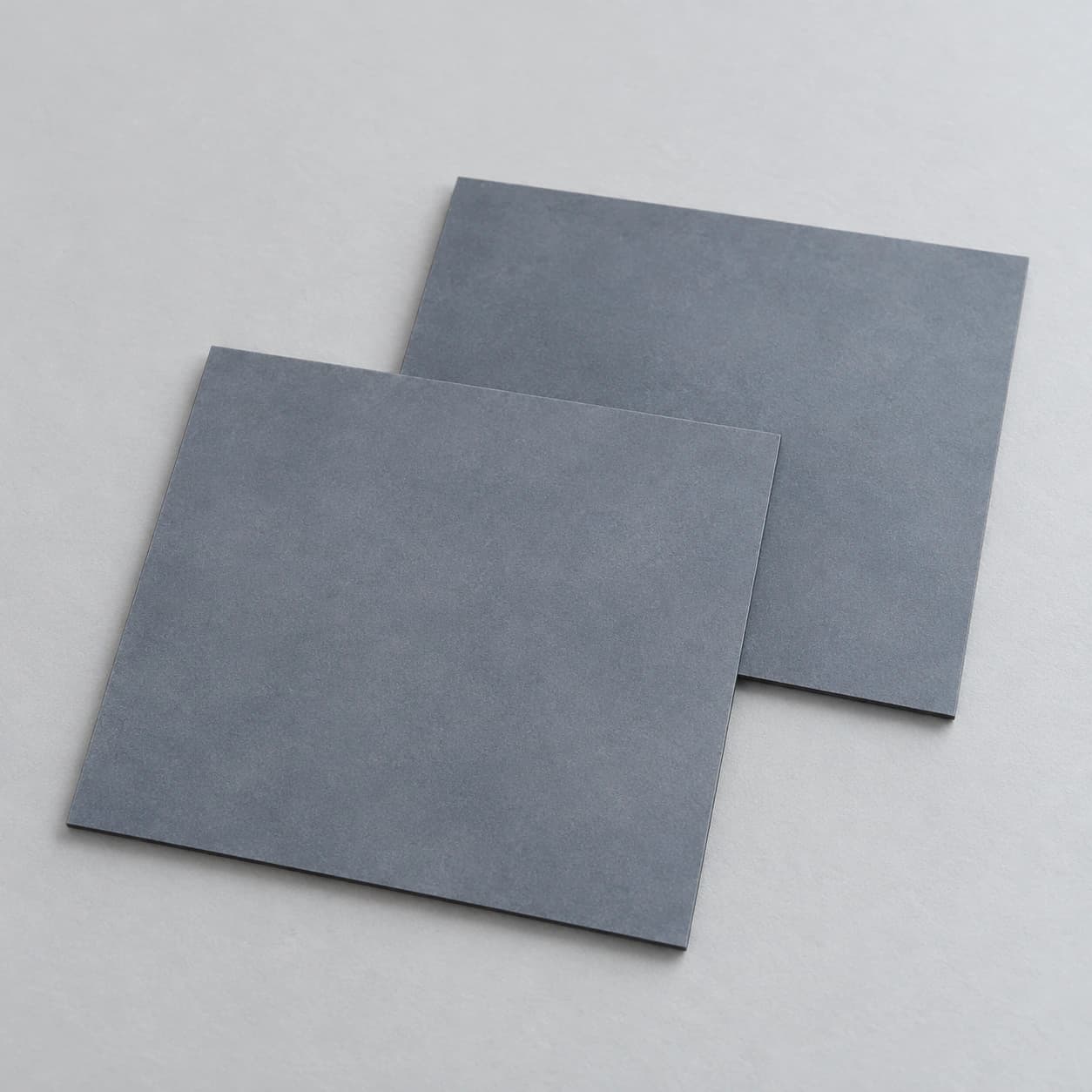
The illustrated family shows plain plates and kiln-support examples. Wear-contact plates require separate geometry, loading and material-route review.
View product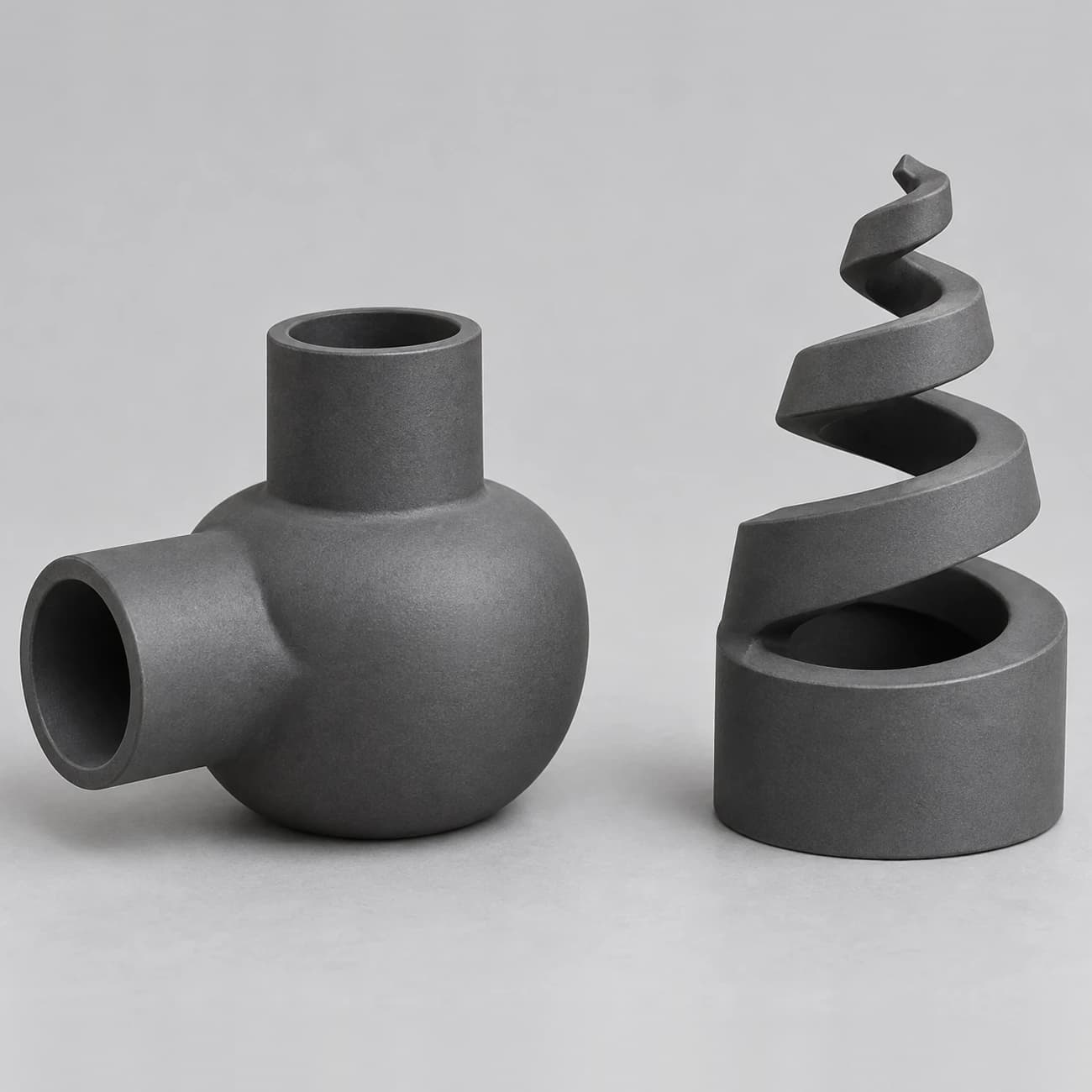
The illustrated family shows FGD slurry-spray nozzle forms. Other nozzle duties require their own flow, connection and internal-geometry review.
View product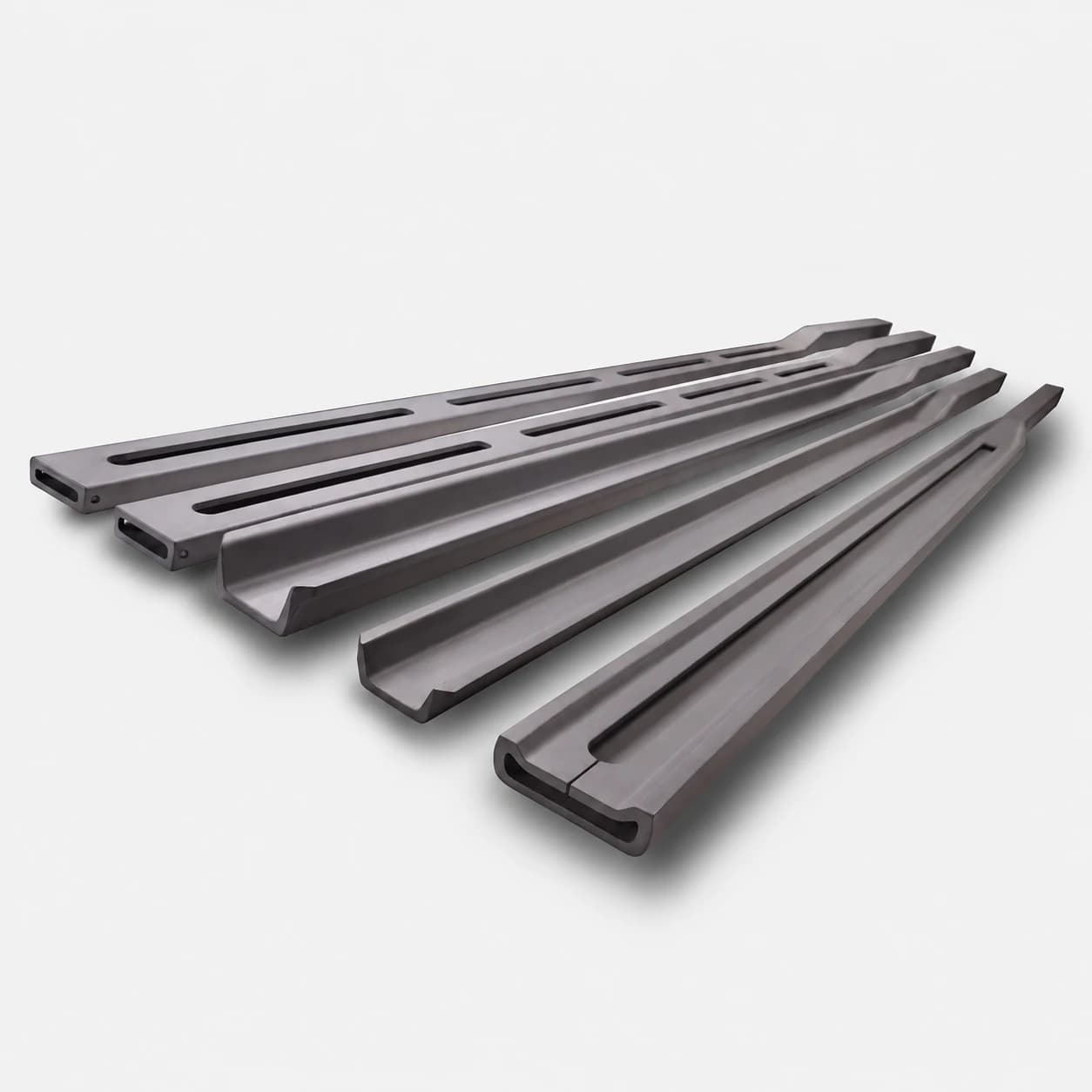
Slotted and open U-channel cantilever paddle profiles for drawing-based application review.
View product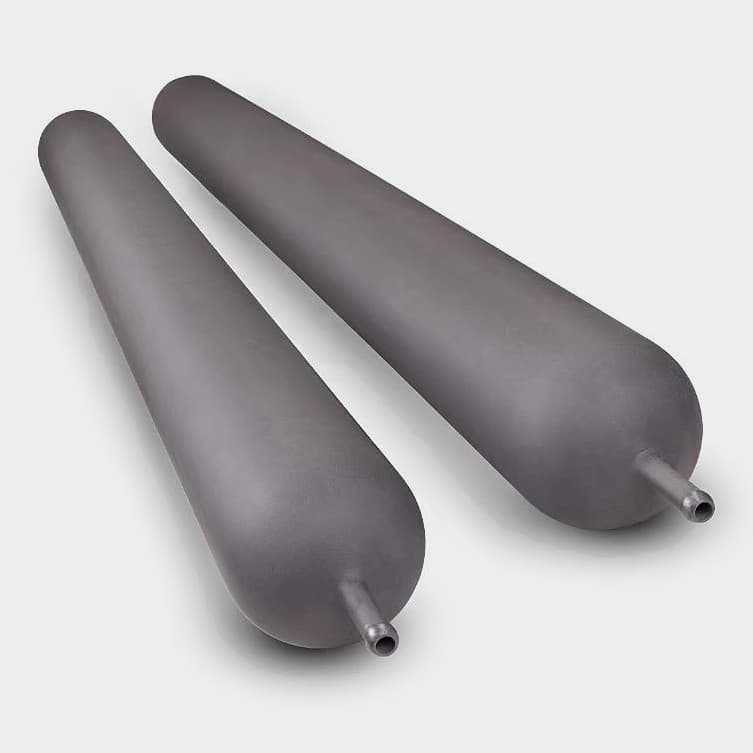
Drawing-based furnace tubes with geometry and operating requirements reviewed for the application.
View product