
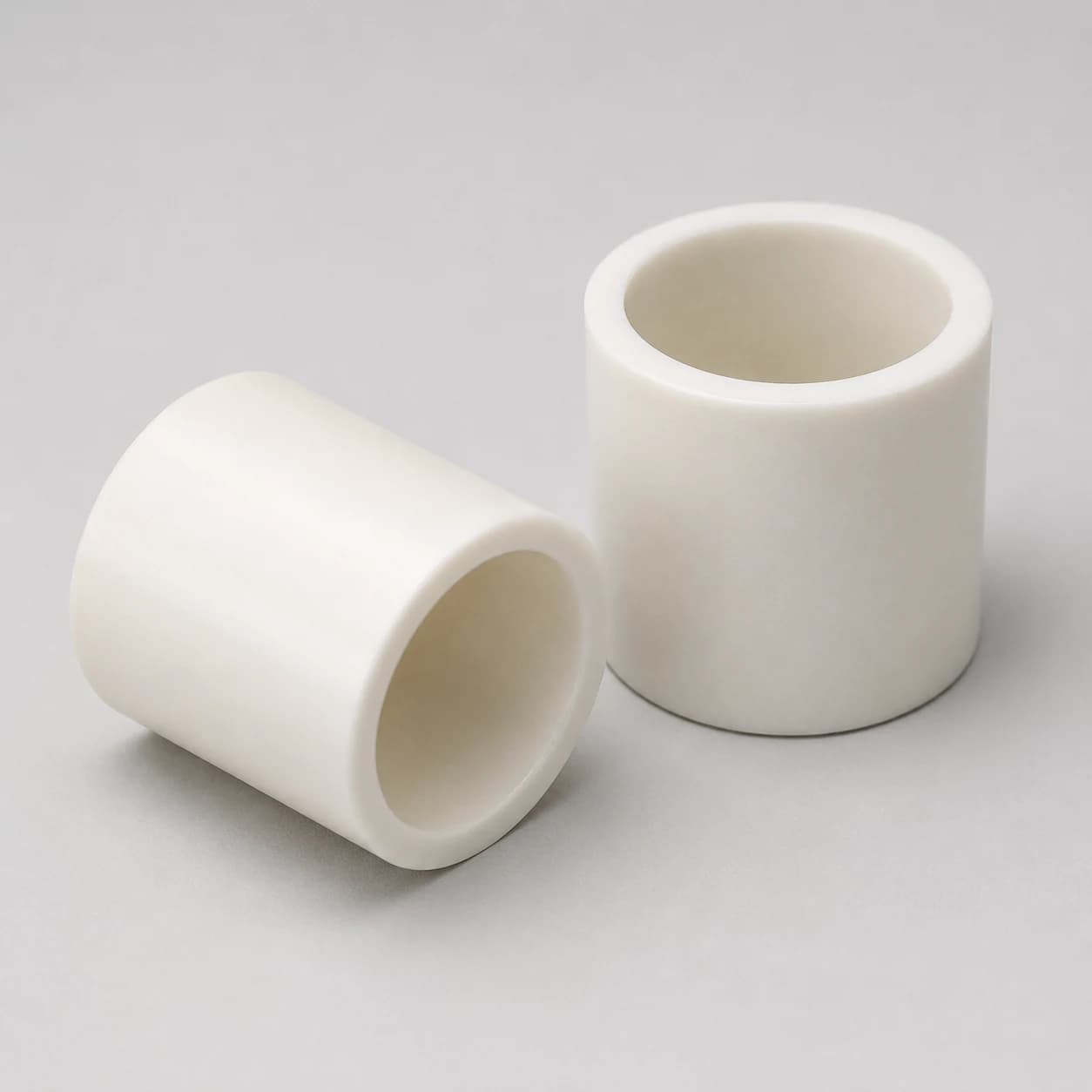
Alumina Ceramic Tubes
Alumina Ceramics Component
SKU: FWM/ALU-TUBE-001
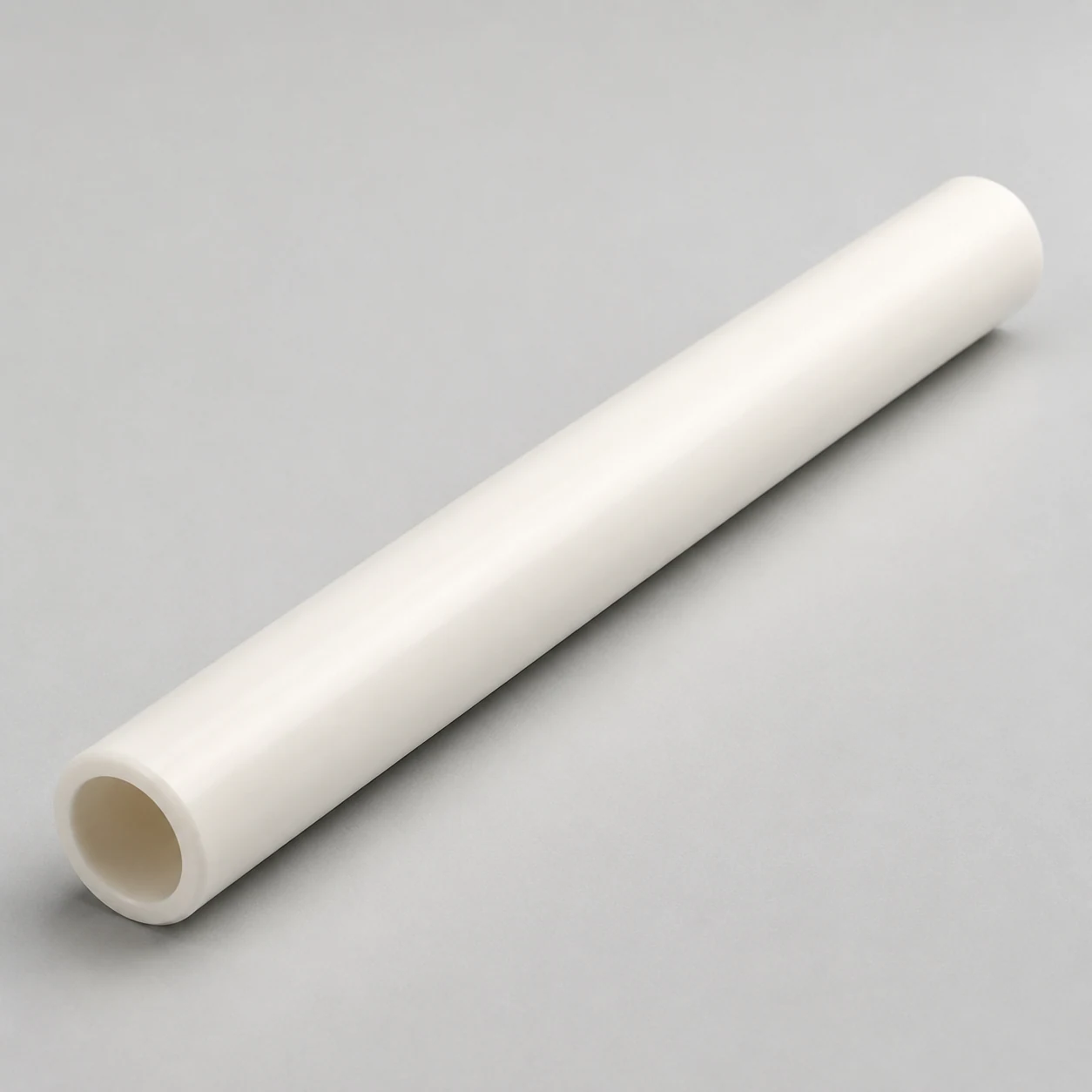
- Material
- Alumina
- Size
- Custom by drawing
- MOQ
- By quotation
- Applications
- High-Temperature Equipment
Alumina ceramic tubes form heat-resistant process passages, protective sheaths and electrical insulating supports in furnaces, instruments and industrial equipment.
Browse Products
Alumina Ceramic Products
Zirconia Ceramic Products
Silicon Carbide Products
Silicon Nitride Products
Aluminum Nitride Products
Product Description
Alumina tubes provide electrically insulating and heat-resistant passages, supports and protective barriers.
Alumina ceramic tubes form heat-resistant process passages, protective sheaths and electrical insulating supports in furnaces, instruments and industrial equipment.
An open-ended tube carries or surrounds process materials, a closed-end sheath protects an internal component, and a multi-bore insulator separates and supports wires or heating elements. Alumina provides electrical insulation together with hardness and oxidation stability.
Product Features
- Electrical insulation separates conductors and supports internal components
- Oxidation-stable ceramic body for controlled high-temperature processing
- Hard surfaces resist wear at guides and protective interfaces
- Open, closed-end and multi-bore forms serve different flow and protection functions
Typical Applications
- Heat-treatment and laboratory furnaces — process tubes around samples or controlled process spaces
- Temperature measurement — protective sheaths around compatible sensing assemblies
- Electrical heating equipment — single- and multi-bore insulators supporting wires or heating elements
Product Geometry & Configuration
Alumina Typical Material Properties
| Property | 95% Al₂O₃ | 99% Al₂O₃ | 99.5% Al₂O₃ | 99.8% Al₂O₃ | Condition / basis |
|---|---|---|---|---|---|
| Density (g/cm³) | 3.65 | 3.85 | 3.90 | 3.92 | — |
| Fracture toughness (MPa·m½) | 3–4 | 3–4 | 4 | 4 | — |
| Young’s modulus (GPa) | 320 | 340 | 370 | 390 | — |
| Flexural strength (MPa) | 300 | 330 | 375 | 390 | 25°C |
| Compressive strength (MPa) | 2200 | 2350 | 2450 | 2500 | 25°C |
| Thermal conductivity (W/(m·K)) | 18–22 | 27 | 29 | 32 | 25°C |
| Linear thermal expansion coefficient (10⁻⁶/K) | 8 | 8 | 8 | 8 | 25–1000°C |
| Dielectric strength (kV/mm) | 16 | 20 | 22 | 22 | — |
| Volume resistivity (Ω·cm) | 10¹⁴ | 10¹⁴ | 10¹⁴ | 10¹⁴ | 25°C |
| Relative permittivity | 9 | 9.7 | 9.7 | 9.8 | 1MHz, 25°C |
| Dielectric loss | 0.0004 | 0.0002 | 0.0002 | 0.0001 | 1MHz, 25°C |
| Vickers hardness (HV) | >1300 | 1700 | 1750 | 1800 | — |
| Material thermal-shock temperature difference, ΔT (°C) | 220 | 180–200 | 180–200 | 180–200 | — |
| Typical maximum material temperature (°C) | 1500 | 1650 | 1700 | 1700 | — |
Product Geometry & Configuration
| Product parameter | Configuration | Function |
|---|---|---|
| Tube form | Open-ended, closed-end or multi-bore | Process passage, component protection or conductor separation |
| Main dimensions | Outside diameter, bore diameter and length | Defines the installation envelope and wall section |
| End interfaces | Plain ends, shoulders, flanges or other drawing-defined features | Matches supports, seals and equipment connections |
| Functional surfaces | Bore, outside diameter and end faces | Finish and tolerances follow fit, flow or insulation duty |
Available Forms
Describe the required configuration and interfaces in the enquiry.
- Open-ended process or insulating tubes
- Closed-end protection-tube requirements
- Single- or multi-bore insulation layouts
- Custom end, flange and mounting details
Packaging & Shipping
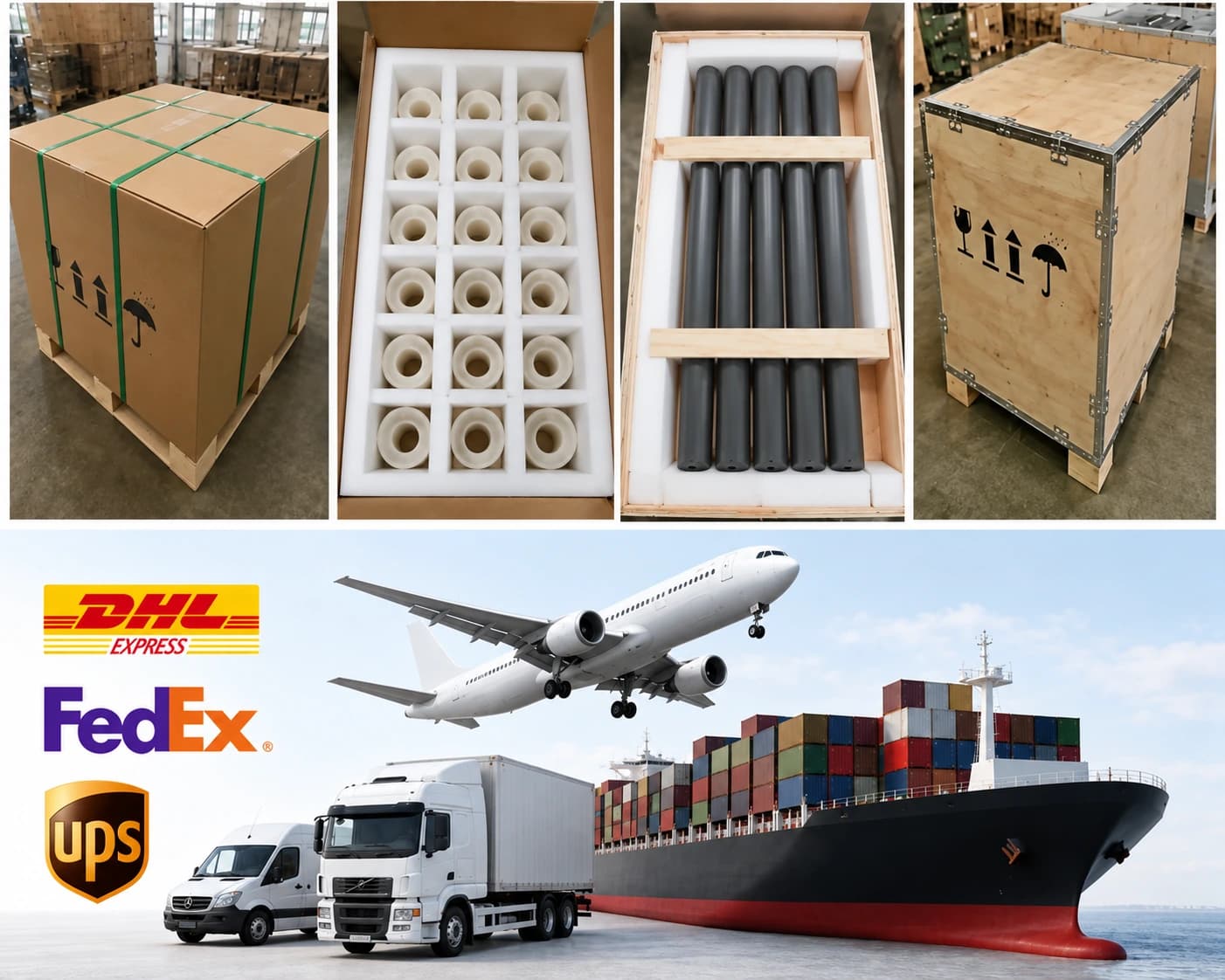
Packing and shipment arrangements are selected for the confirmed component geometry and surface requirements.
| Item | Details |
|---|---|
| Product protection | Protection method is selected for component geometry, surface condition and quantity. |
| Other commercial terms | Confirmed in quotation |
| Payment terms | T/T / Western Union / PayPal; 50% advance payment, 50% balance before shipment |
| Shipping methods | Sea freight / Air freight / Door-to-door courier |
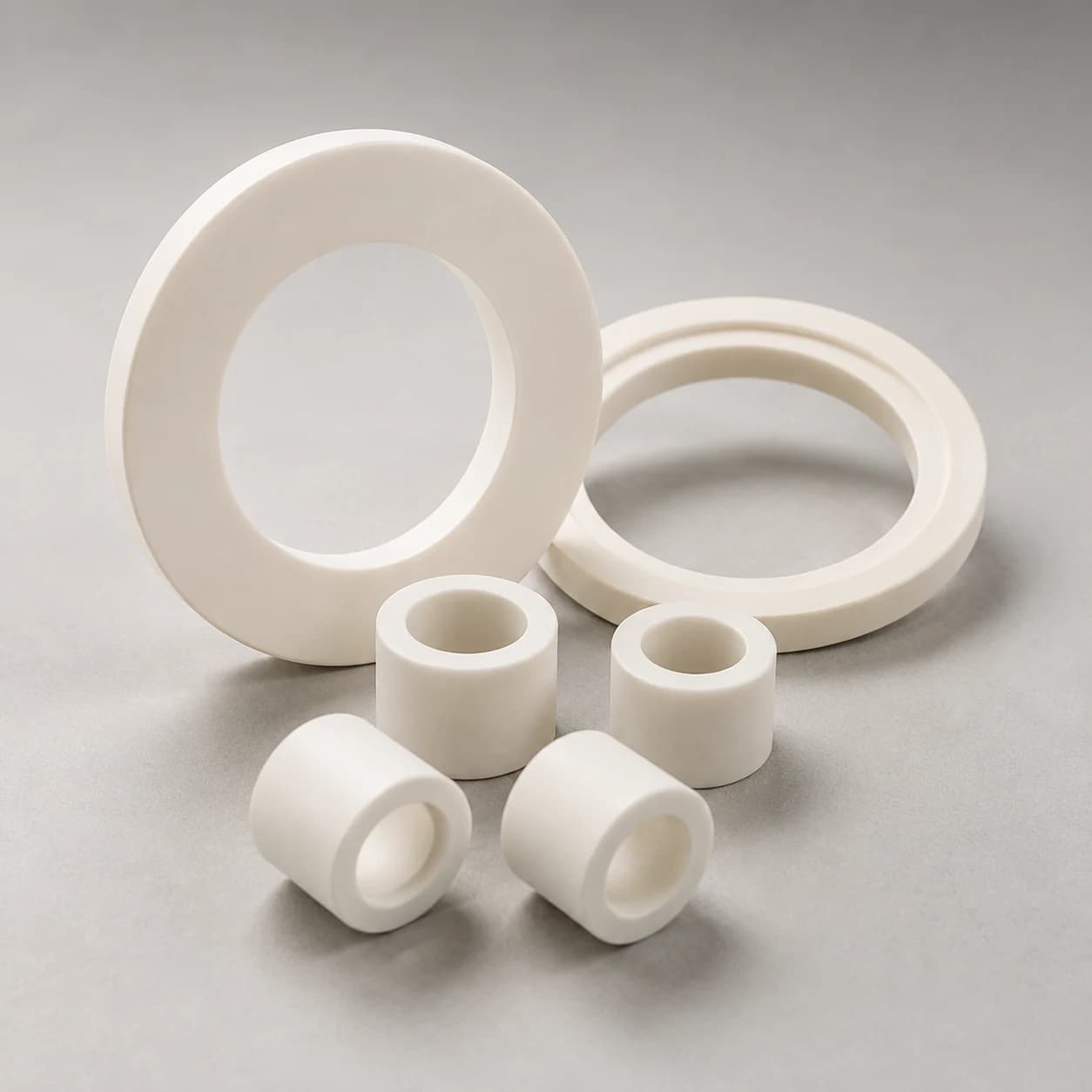
Related Alumina Ceramics Products
Explore related products within the same canonical family.
Frequently Asked Questions
What should I include with a tube enquiry?
Include outside and inside diameter, length, end configuration, drawing, operating medium, temperature cycle and quantity. State pressure or vacuum requirements and critical mounting or sealing features.
Does one temperature rating apply to every alumina tube?
No. Purity, geometry, atmosphere, heating rate and installation affect service suitability. Describe the full operating cycle rather than relying only on a peak-temperature number.
Can I begin before I have a complete drawing?
Yes. Send a dimensional sketch, existing part reference and application description. Highlight the functional surfaces and installation constraints so the specification can be developed efficiently.