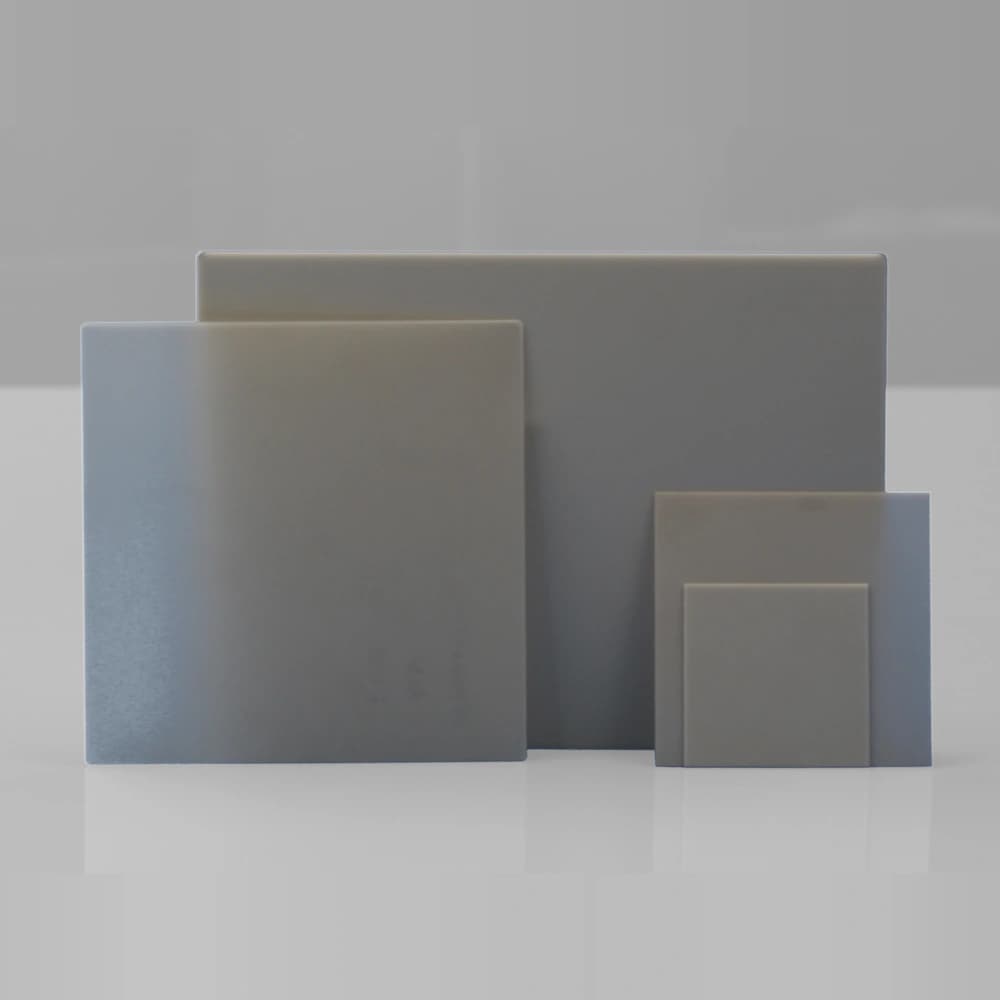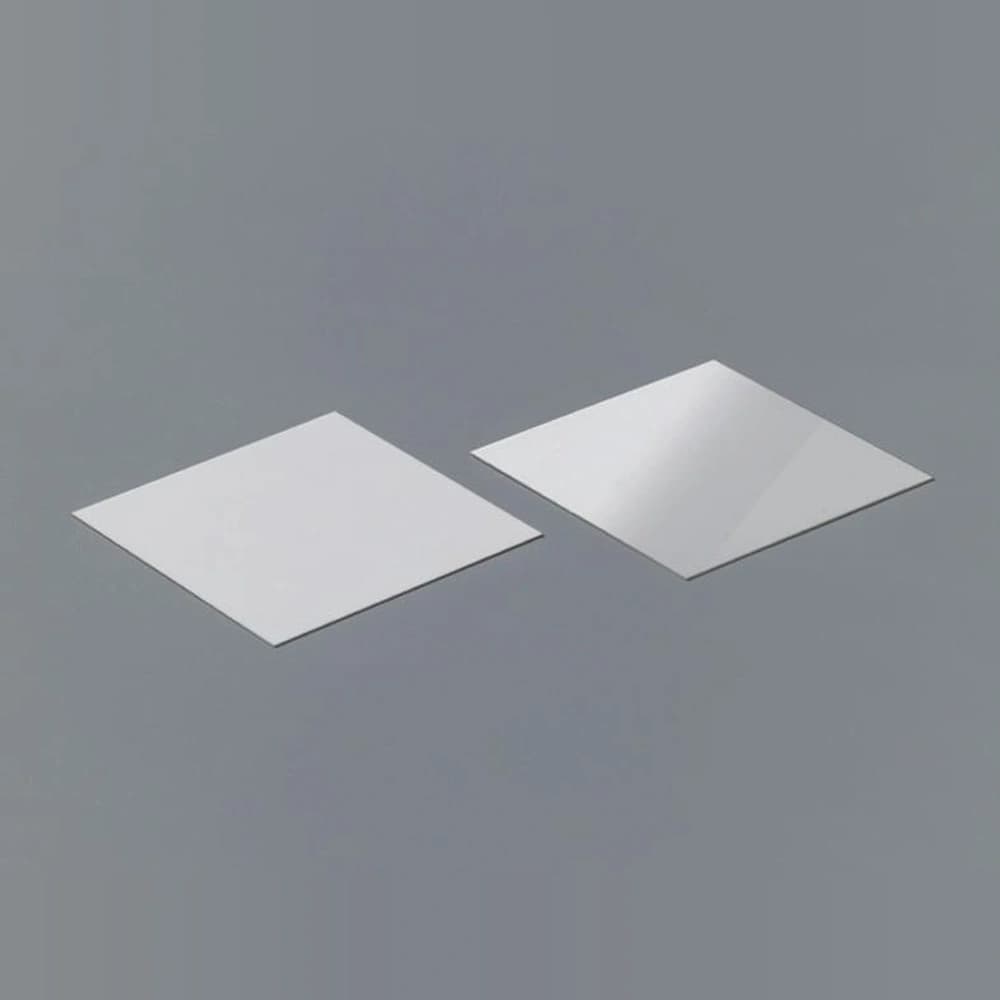
Bare Silicon Nitride Ceramic Substrate Sheets
Ceramic Substrate
SKU: FWM/CS-SN-001
- Material
- Silicon Nitride
- Size
- Custom sizes by drawing
- MOQ
- 5 pieces
- Applications
- SiC Power Modules
High-strength Si3N4 substrate sheets for reliability-focused power electronics and severe thermal-cycling applications.
Browse Products
Alumina Ceramic Products
Zirconia Ceramic Products
Silicon Carbide Products
Silicon Nitride Products
Aluminum Nitride Products
Product Description

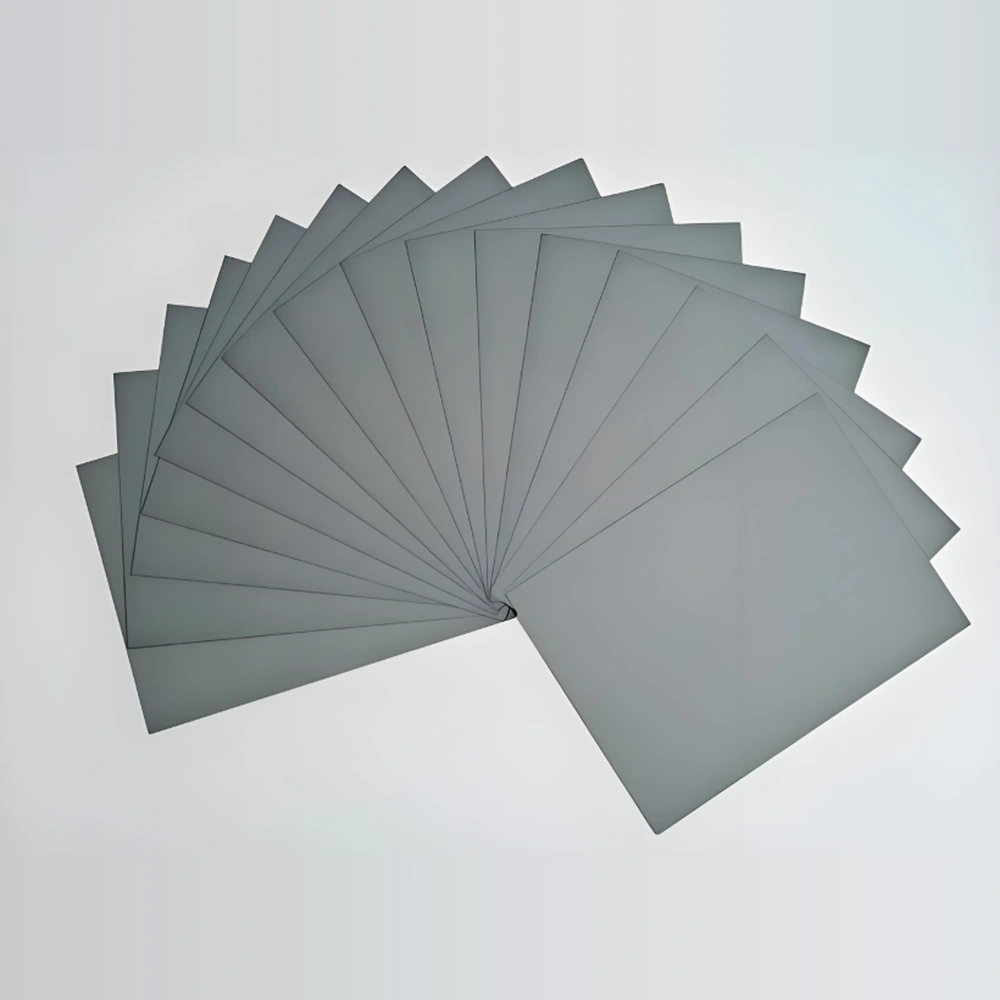
Silicon nitride substrate sheets are bare insulating ceramic carriers for power-electronics constructions, including subsequent copper bonding.
Si3N4 combines mechanical strength and fracture toughness with heat conduction, making it useful where thermomechanical stress is a major design concern. A bare sheet is distinct from an AMB copper-clad substrate or a qualified power module.
This is a bare Si3N4 sheet, not a copper-clad AMB assembly. Material grade, thickness and thermal-cycling suitability require qualification.
Product Advantages
- Mechanical strength and fracture toughness support constructions exposed to thermomechanical stress.
- The bare Si3N4 layer provides electrical isolation within a later bonded circuit stack.
- Heat conduction through the ceramic complements its mechanical role in power-electronic carriers.
Typical Applications
- SiC Power Modules: bare Si3N4 sheets supply the ceramic layer for subsequent copper-clad circuit constructions.
- Automotive Inverters: the ceramic combines electrical insulation with mechanical strength within the completed substrate stack.
Technical Data
Si₃N₄ Substrate (Sinalit) Properties
| Property | Sinalit — bare Si₃N₄ substrate | Conditions / ±10% measurement tolerance (except ref.) |
|---|---|---|
| Density (g/cm³) | ≥3.22 | DIN EN 993-1 |
| Bending strength (MPa) | ≥700 | — |
| Fracture toughness (MPa·m½) | ≥6.5 | Indentation-fracture method |
| Thermal conductivity (W/(m·K)) | 90 | Room temperature; DIN EN 821-2 |
| Coefficient of thermal expansion (10⁻⁶/K) | 3.3 (ref.) | 100–800°C; DIN 51045-1 |
| Dielectric strength (kV/mm) | ≥25 | 20°C; AC / DC; DIN EN 60243-1 |
| Volume resistivity (Ω·cm) | ≥10¹⁴ | Room temperature; IEC 62631-3 |
| Young’s modulus (GPa) | ≥280 | ASTM C1259-15 |
| Specific heat capacity (J/(g·K)) | ≥0.68 | 25°C; DIN EN 821-3 Method B |
| Relative permittivity | 7.8 (ref.) | Room temperature; 1 MHz; Ra ≤0.4 µm; ASTM D150 |
| Dielectric loss tangent | ≤0.003 | Room temperature; 1 MHz; Ra ≤0.4 µm; ASTM D150 |
How to Read the Parameters
- Flexural strength
Strength is expressed in MPa and depends on the specimen and test.
Specify: Grade, test geometry and surface preparation.
- Fracture toughness
Resistance to crack propagation is expressed in MPa·√m.
Specify: Test method and grade; do not substitute flexural strength.
- Thermal conductivity
A ceramic-grade property in W/(m·K).
Specify: Temperature and method; not the finished-module thermal resistance.
- Cycling performance
A qualified result for a particular stack and profile.
Specify: Temperature range, dwell, ramp, samples and failure criteria.
Si3N4: mechanical and thermal balance
Power-substrate grades of silicon nitride are considered where strength, fracture resistance and repeated temperature changes are central constraints. A bare Si3N4 sheet and a finished copper-clad AMB stack require different specifications.
01Define the module constraints
Identify thermal loading, mechanical support, isolation needs and the operating profile.
02Choose the ceramic grade
Review strength, toughness and conductivity together rather than using a single property.
03Define the bare-sheet condition
Specify thickness, functional surfaces, outline and edge requirements.
04Qualify the completed construction
Where AMB is planned, assess copper distribution, braze integrity and the assembly-specific reliability profile.
Application Conditions & Design Review
Balance strength and heat transfer
Silicon nitride substrates are considered where mechanical robustness and thermal performance both matter. Select the grade and thickness around the module's stress and heat-removal requirements.
Define the next joining operation
A bare Si3N4 sheet is not an AMB circuit. State the intended braze or metallization route so surface condition and interface preparation can be reviewed before production.
Strength versus heat transfer
Compare the selected ceramic grade on both mechanical and thermal requirements.
Bare versus AMB
Do not apply copper-clad cycle results to a bare sheet or a different layer stack.
Edge and support design
Include handling, mounting and ceramic-edge condition in the mechanical review.
Send With Your Drawing
- Si3N4 grade requirements, outline, thickness and functional-surface condition.
- Intended metallization/braze system and copper configuration if applicable.
- Mechanical support, thermal loading and qualification conditions.
Include the drawing revision, sample and production quantities, and required inspection documents.
Define Acceptance Before Production
- Inspect material identification, geometry, edges and allowable surface defects.
- Qualify the joined stack and its cycling behavior separately from the bare sheet.
Agree the test methods, sampling plan, acceptance limits and required reports before production.
Available Forms & Processing
Product-specific geometry and processing features.
- Bare Si3N4 sheets with defined outline, thickness and usable area.
- Flatness, surface finish and edge quality specified for the subsequent bonding interface.
- Ceramic-sheet requirements kept distinct from the copper, braze and finished AMB stack.
Engineering Questions
Does a tougher ceramic eliminate the need for thermal-cycle testing?
No. Reliability also depends on copper geometry, joining interfaces and assembly conditions. Test the complete construction against the intended duty cycle.
Is every Si3N4 grade suitable for a power substrate?
No. Specify the power-substrate grade and its thermal, mechanical and surface requirements rather than relying on the material name alone.
Does high toughness establish AMB service life?
No. Copper geometry, layer thicknesses, joining quality, assembly and the operating profile also influence reliability.
Packaging & Shipping
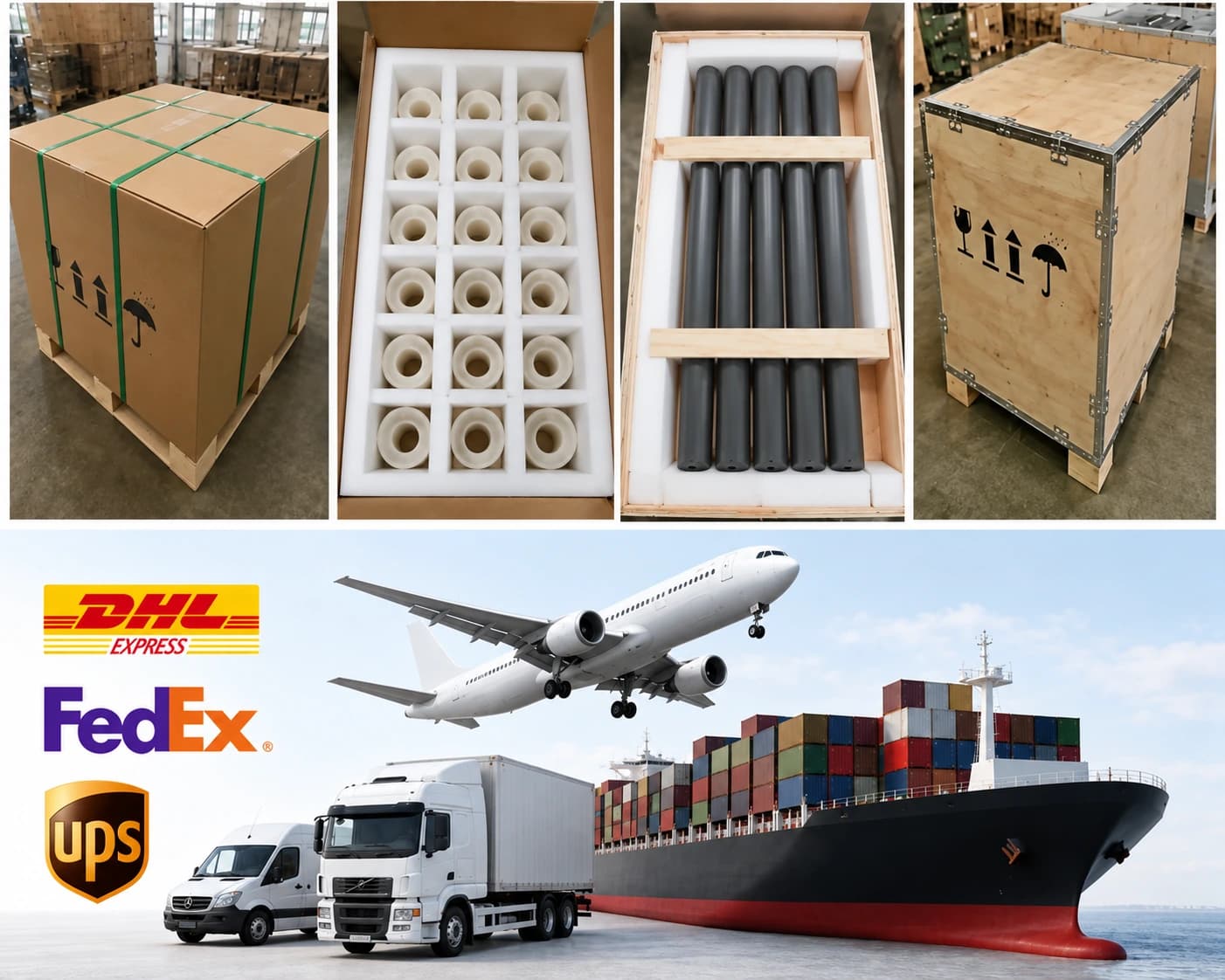
Packaging protects ceramic edges and the selected copper finish.
| Item | Details |
|---|---|
| Packaging approach | Packaging protects ceramic edges and the selected copper finish. |
| Protection methods | Individual part or master-card separation; Rigid trays; Surface-protection layers; Corrosion protection for copper where appropriate; Inner box and export carton; Wooden case when required |
| MOQ reference | 5 pieces |
| Lead-time references | Bare substrates: 4–7 weeks; AMB configurations: 6–10 weeks |
| Payment terms | T/T / Western Union / PayPal; 50% advance payment, 50% balance before shipment |
| Shipping methods | Sea freight / Air freight / Door-to-door courier |
Related Ceramic Substrate Products
Compare related ceramic substrate materials and metallization routes within the same product family.