
Silicon Carbide Ceramic Tubes
Ceramic Tube
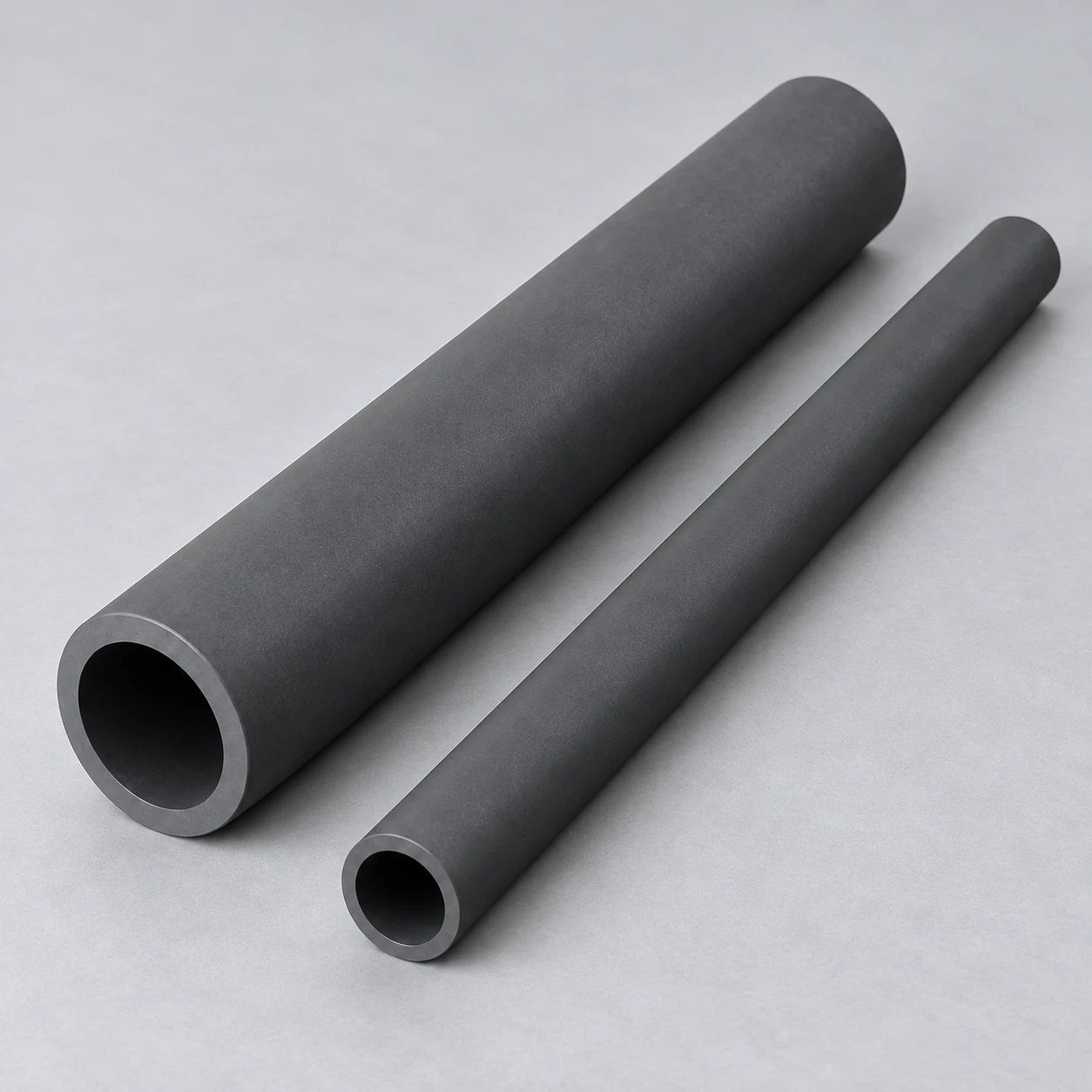
- Material
- Silicon Carbide
- Size
- Drawing-defined dimensions
- Quantity
- Specify trial and production quantities
- Applications
- Chemical processing and thermal equipment
Silicon carbide ceramic tubes provide hard, corrosion-resistant passages and protective barriers for chemical processing, heat exchange and thermal equipment.
Browse Products
Alumina Ceramic Products
Zirconia Ceramic Products
Silicon Carbide Products
Silicon Nitride Products
Aluminum Nitride Products
Product Description
Silicon carbide ceramic tubes provide hard, corrosion-resistant passages and protective barriers for chemical processing, heat exchange and thermal equipment.
Silicon carbide tubes carry process media, transfer heat through their walls or protect components from abrasive, corrosive and hot environments. An open-bore tube provides a passage; a closed-end tube can separate a sensor from the surrounding process.
High hardness helps resist bore erosion, while thermal conductivity supports heat exchange and reduces temperature gradients through the wall. Chemical resistance makes dense SiC a useful option for many aggressive liquids and gases.
Sintered and reaction-bonded SiC differ in residual phases and service limits. The route, bore, wall thickness and end interfaces are selected for the actual medium and installation; formed furnace tubes are covered separately on the furnace-tube page.
Product Features
- Wear-resistant bore: The hard ceramic surface resists abrasive particles moving through or along the tube, helping preserve the working passage.
- Heat-transfer capability: High thermal conductivity is useful in heat-exchanger tubes and supports more even wall temperatures in thermal equipment.
- Chemical resistance: Suitable SiC grades resist many corrosive process fluids. Residual silicon, chemical concentration and temperature affect the material choice.
- Low thermal expansion: Limited expansion helps maintain tube geometry during temperature changes; joints and supports must accommodate movement of mating materials.
- Function-specific ends and surfaces: Open or closed ends, shoulders and connection features adapt the tube to flow, protection, support and sealing interfaces.
Typical Applications
- Chemical-process heat exchangers: corrosion-resistant tubes that transfer heat across the wall
- Abrasive or corrosive process passages: hard bores and liners exposed to moving media
- Thermocouple and sensor protection: closed-end tubes separating the instrument from the process
- Furnace and thermal-process equipment: tube supports or protective passages selected for the atmosphere and heating cycle
Typical Properties & Product Data
Dense SiC Typical Properties
| Property | SSiC — sintered | SiSiC / RBSiC — reaction bonded | Condition |
|---|---|---|---|
| Density (g/cm³) | ≥3.12 | ≥3.03 | — |
| Apparent porosity (%) | <0.2 | <0.2 | — |
| Vickers hardness (HV0.5) | 2100 | 2000 | 0.5 kgf test force |
| Young’s modulus (GPa) | 400 | 350 | — |
| Fracture toughness (MPa·m¹/²) | 4–5 | 2.5–3.5 | — |
| Flexural strength (MPa) | ≥400 | ≥350 | 25°C |
| Compressive strength (MPa) | ≥2200 | ≥2000 | 25°C |
| Thermal conductivity (W/(m·K)) | ≥110 | ≥90 | 25°C |
| Mean linear thermal expansion coefficient (10⁻⁶/K) | 4.0 | 4.0 | 25–1000°C |
| Typical maximum material temperature (°C) | 1650 | 1300 | — |
Product Geometry & Configuration
| Product parameter | Configuration | Function |
|---|---|---|
| Tube form | Open-ended passage or closed-end protection tube | Transfers media or separates a sensor/component from the process |
| Main dimensions | Outside diameter, inside diameter and length | For a concentric straight tube, wall thickness = (OD − ID) / 2 |
| End features | Plain ends, shoulders, flanges or formed connections | Matches supports, joints and equipment interfaces |
| Functional surfaces | Bore, outside surface and end faces | Finish and tolerances follow flow, wear, fit or sealing duty |
| Material route | Dense sintered or reaction-bonded SiC; other routes by duty | Residual phases and porosity affect chemical and thermal suitability |
Reading a Ceramic Tube Specification
Use the same datum system for the bore, outside surface and end faces. Dimensions describe the part; tolerances define which deviations affect the installation.
| Parameter | Meaning | Specification guidance |
|---|---|---|
| OD / ID / L | Outside diameter / inside diameter / overall length | State units and measurement locations, especially for stepped or tapered parts. |
| Wall thickness t | For a concentric straight tube: t = (OD − ID) / 2 | Local minimum wall also depends on bore offset and the actual cross-section. |
| Straightness / coaxiality | Form of the tube and alignment of bore to outside datum | Specify the controlled surface, datum and inspection length on the drawing. |
| Surface finish | Bore, outside surface and end faces may have different requirements | Identify Ra or another agreed parameter, units and the functional surface. |
| End configuration | Open-ended, closed-end, flange, shoulder or connection feature | Give sealing face, chamfer/radius and mating-part details separately. |
OD/ID geometry does not establish a pressure rating. Pressure, vacuum, support and thermal duty require assessment of the selected material and complete tube design.
Available Forms
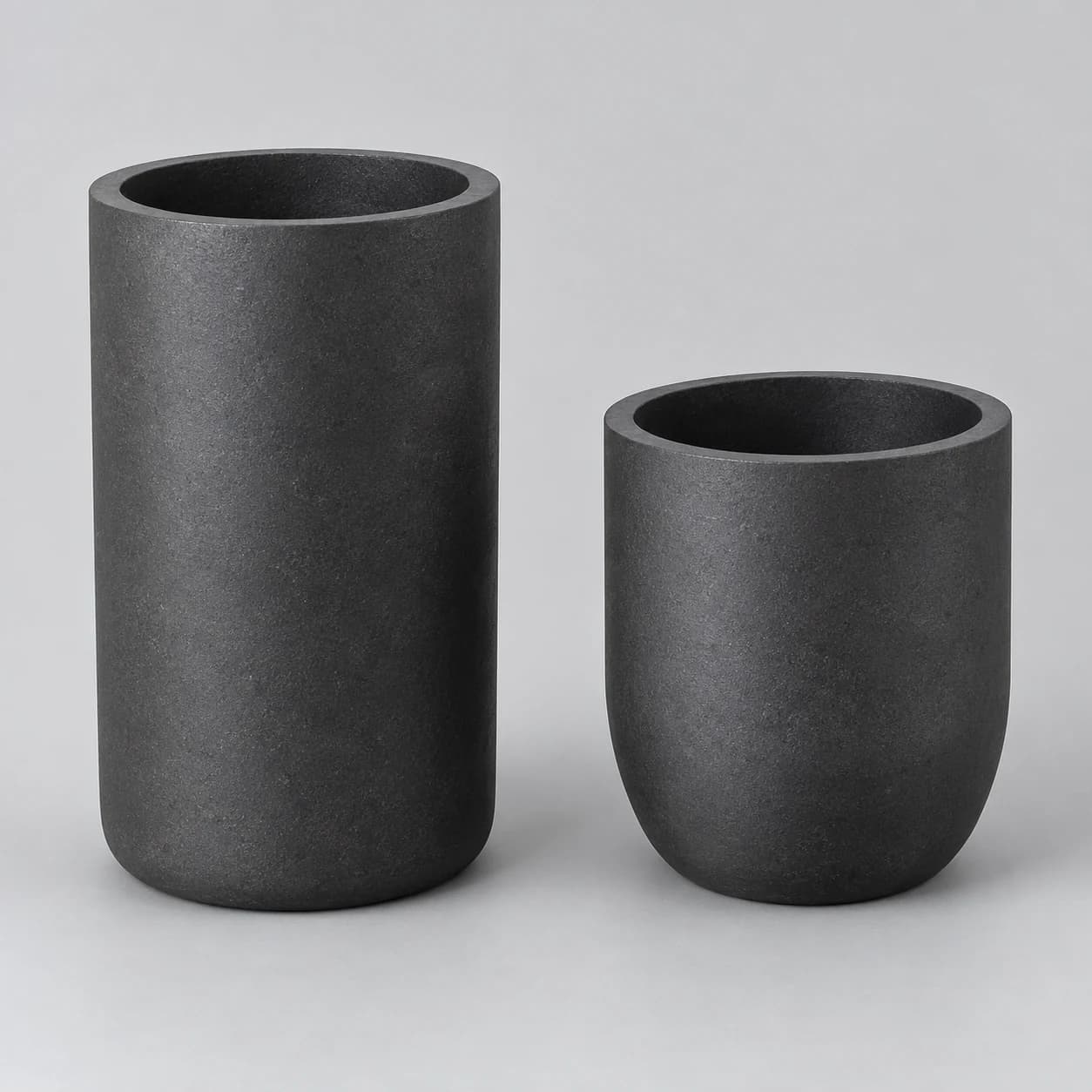
Straight hollow tube forms are shown with different relative bores and lengths. Furnace tubes, protection tubes and other equipment duties have separate material and installation requirements.
- Straight open-bore tubes
- Closed-end protection requirements
- Drawing-defined flanges, steps and connections
Packaging & Shipping
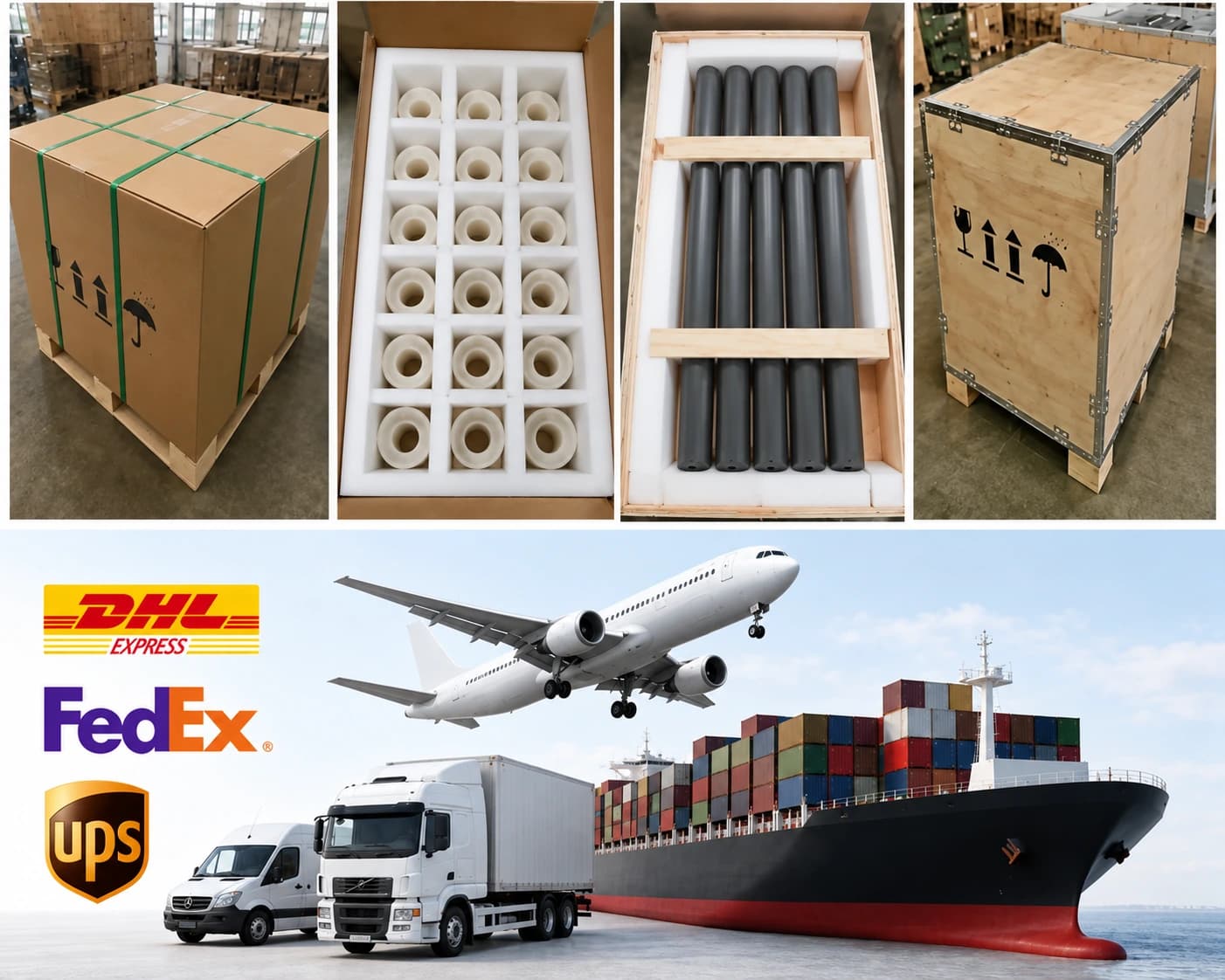
Packaging and transport are specified around component geometry, quantity and delivery requirements.
| Item | Details |
|---|---|
| Protection | Identify fragile edges, functional surfaces and individual separation requirements. |
| Packing scope | Confirm protective materials, carton or case arrangement and handling instructions with the order. |
| Shipping requirements | Provide destination, requested transport method and delivery requirements. |
| Payment terms | T/T / Western Union / PayPal; 50% advance payment, 50% balance before shipment |
| Shipping methods | Sea freight / Air freight / Door-to-door courier |
Related Ceramic Products
Explore distinct product requirements and material selections.
Frequently Asked Questions
Is a ceramic tube the same as a furnace tube?
A furnace tube is an application-specific type. Generic tube requirements can have different media, interfaces and shapes; furnace imagery and specifications do not represent every tube.
How is a tube different from a rod or sleeve?
A tube has a specified internal bore; a rod is solid. A sleeve is generally specified around the component it surrounds and its fit. Include bore, length and installation details.
Can one property table cover every SiC tube?
No. Route, residual phases, porosity, geometry and service conditions determine relevant properties. State the existing grade or application for a specific proposal.