
Silicon Carbide Ceramic Plates
Silicon Carbide Plate
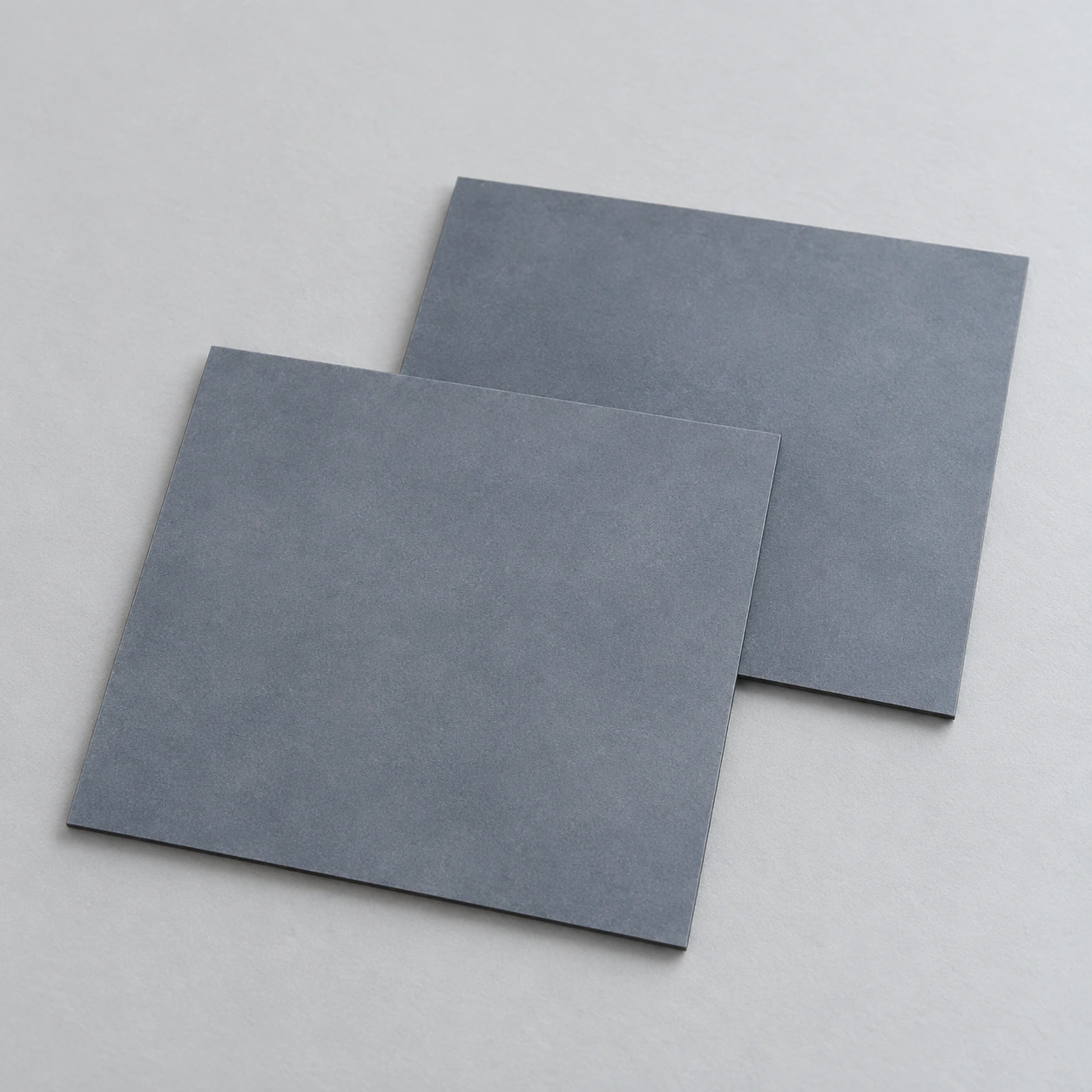
- Material
- Silicon Carbide
- Size
- Drawing-defined dimensions
- Quantity
- Specify trial and production quantities
- Applications
- Kiln furniture and wear protection
Silicon carbide plates support products during firing and heat treatment or protect equipment against abrasive wear, with material routes selected for the thermal or contact duty.
Browse Products
Alumina Ceramic Products
Zirconia Ceramic Products
Silicon Carbide Products
Silicon Nitride Products
Aluminum Nitride Products
Product Description
Silicon carbide plates support products during firing and heat treatment or protect equipment against abrasive wear, with material routes selected for the thermal or contact duty.
Silicon carbide plates provide a flat working surface for two main duties: kiln batts and setter plates support ware through a firing cycle, while wear plates shield equipment from moving abrasive material. These duties use different material and support criteria.
For thermal service, SiC combines useful hot-strength behaviour with heat conduction and low thermal expansion. For wear service, its hardness and chemical resistance help maintain exposed contact surfaces.
Dense sintered, silicon-infiltrated, recrystallized and bonded SiC are distinct material routes. Plate thickness, supported span, load distribution and atmosphere determine suitability; a dense wear plate and a porous kiln shelf are not interchangeable merely because their outlines match.
Product Features
- Thermal-process support: Suitable kiln-furniture grades retain useful strength under hot loading, providing support for ware and furnace charges.
- Heat transfer and thermal cycling: Heat conduction and low expansion help manage temperature gradients during firing, with performance dependent on the selected route and cycle.
- Hard wear surface: Dense SiC grades resist abrasive sliding and slurry erosion in liners and contact plates.
- Efficient support geometry: A suitable combination of material, thickness and support spacing can reduce unnecessary support mass while carrying the intended load.
- Application-specific finishing: Ground faces, holes and edge details match precision supports or wear-system interfaces without treating all kiln plates as precision-ground parts.
Typical Applications
- Ceramic firing: kiln shelves, batts and setters supporting ware during firing
- Heat-treatment furnaces: flat charge supports selected for hot load, span and atmosphere
- Mineral and slurry handling: wear plates protecting surfaces against abrasive motion
- Precision process equipment: ground contact or support plates with drawing-defined interfaces
Typical Properties & Product Data
Dense SiC Typical Properties
| Property | SSiC — sintered | SiSiC / RBSiC — reaction bonded | Condition |
|---|---|---|---|
| Density (g/cm³) | ≥3.12 | ≥3.03 | — |
| Apparent porosity (%) | <0.2 | <0.2 | — |
| Vickers hardness (HV0.5) | 2100 | 2000 | 0.5 kgf test force |
| Young’s modulus (GPa) | 400 | 350 | — |
| Fracture toughness (MPa·m¹/²) | 4–5 | 2.5–3.5 | — |
| Flexural strength (MPa) | ≥400 | ≥350 | 25°C |
| Compressive strength (MPa) | ≥2200 | ≥2000 | 25°C |
| Thermal conductivity (W/(m·K)) | ≥110 | ≥90 | 25°C |
| Mean linear thermal expansion coefficient (10⁻⁶/K) | 4.0 | 4.0 | 25–1000°C |
| Typical maximum material temperature (°C) | 1650 | 1300 | — |
Porous SiC Kiln-Furniture Properties
| Property | RSiC — recrystallized | Fine NBSiC | Condition |
|---|---|---|---|
| SiC content (%) | >99 | 75 | — |
| Si₃N₄ content (%) | — | 25 | — |
| Bulk density (g/cm³) | 2.7 | 2.8 | — |
| Open porosity (%) | 15 | 13 | — |
| Modulus of rupture (MPa) | 90 | 160 | Room temperature |
| Thermal conductivity (W/(m·K)) | 25 | 15 | — |
| Mean linear thermal expansion coefficient (10⁻⁶/K) | 4.8 | 4.7 | 20–1000°C |
| Typical maximum material temperature (°C) | 1650 | 1450 | — |
Product Geometry & Configuration
| Product parameter | Configuration | Function |
|---|---|---|
| Plate duty | Kiln batt/setter, thermal support or wear plate | The duty determines the suitable material route |
| Main dimensions | Length, width, thickness and drawing-defined outline | Defines contact area, fit and bending section |
| Supports and loading | Supported span, load distribution and stacking arrangement | Controls bending and hot-service stability |
| Functional surfaces | Flat or profiled faces, holes, grooves and edge details | Matches ware support, mounting or wear protection |
| Attachment | Freestanding support, mechanically retained liner or specified bonding | Allows for expansion, joints and local stresses |
Available Forms
AI-generated form illustrations, not photographs of supplied parts. Plain plate forms and kiln-support examples are shown separately. The kiln shelves do not represent precision dense wear plates; material route, grade and operating duty require separate confirmation.
- Kiln batts and support plates
- Wear plates and liners
- Precision flat-component requirements
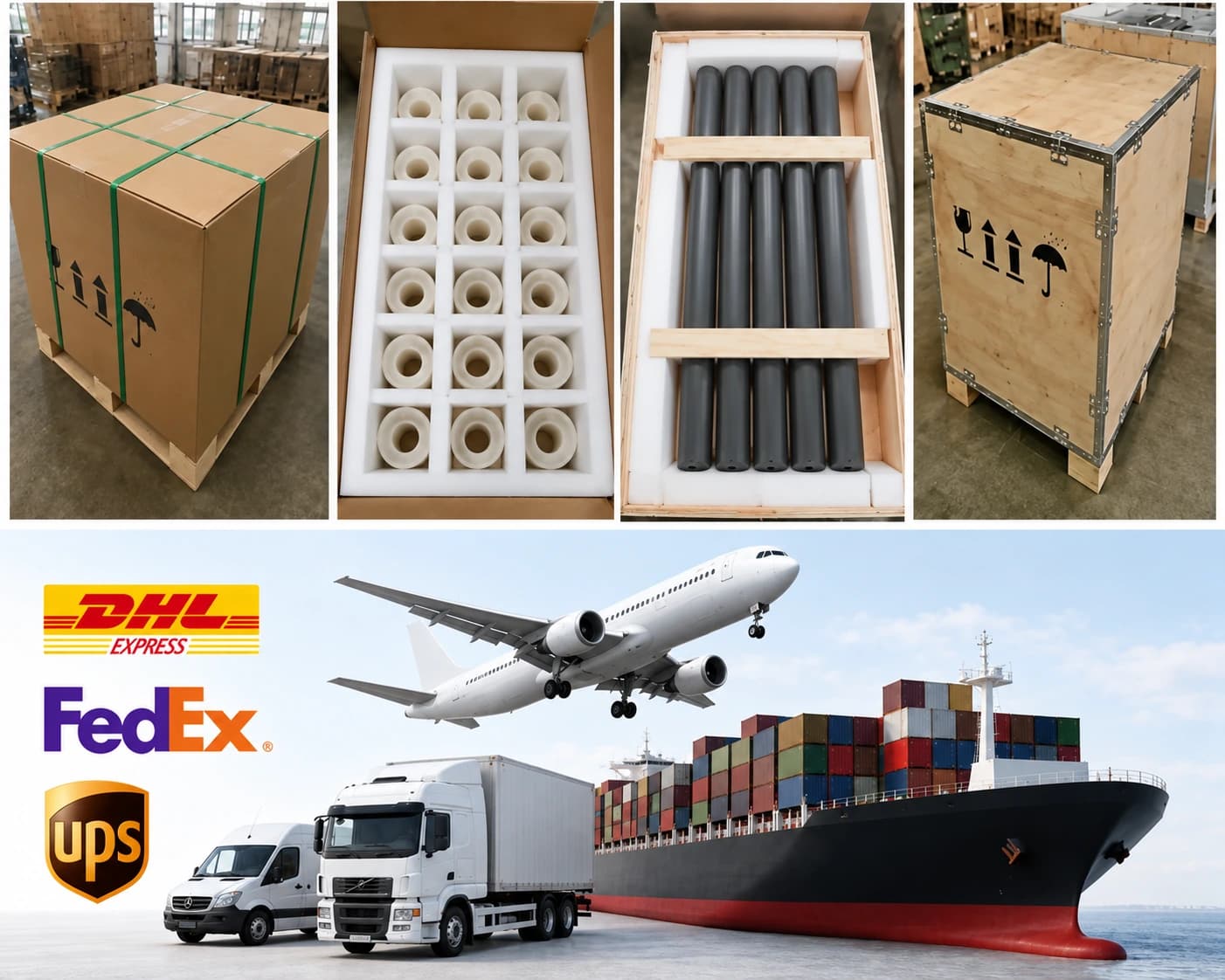
Packaging & Shipping
Packaging and transport are specified around component geometry, quantity and delivery requirements.
| Item | Details |
|---|---|
| Protection | Identify fragile edges, functional surfaces and individual separation requirements. |
| Packing scope | Confirm protective materials, carton or case arrangement and handling instructions with the order. |
| Shipping requirements | Provide destination, requested transport method and delivery requirements. |
| Payment terms | T/T / Western Union / PayPal; 50% advance payment, 50% balance before shipment |
| Shipping methods | Sea freight / Air freight / Door-to-door courier |
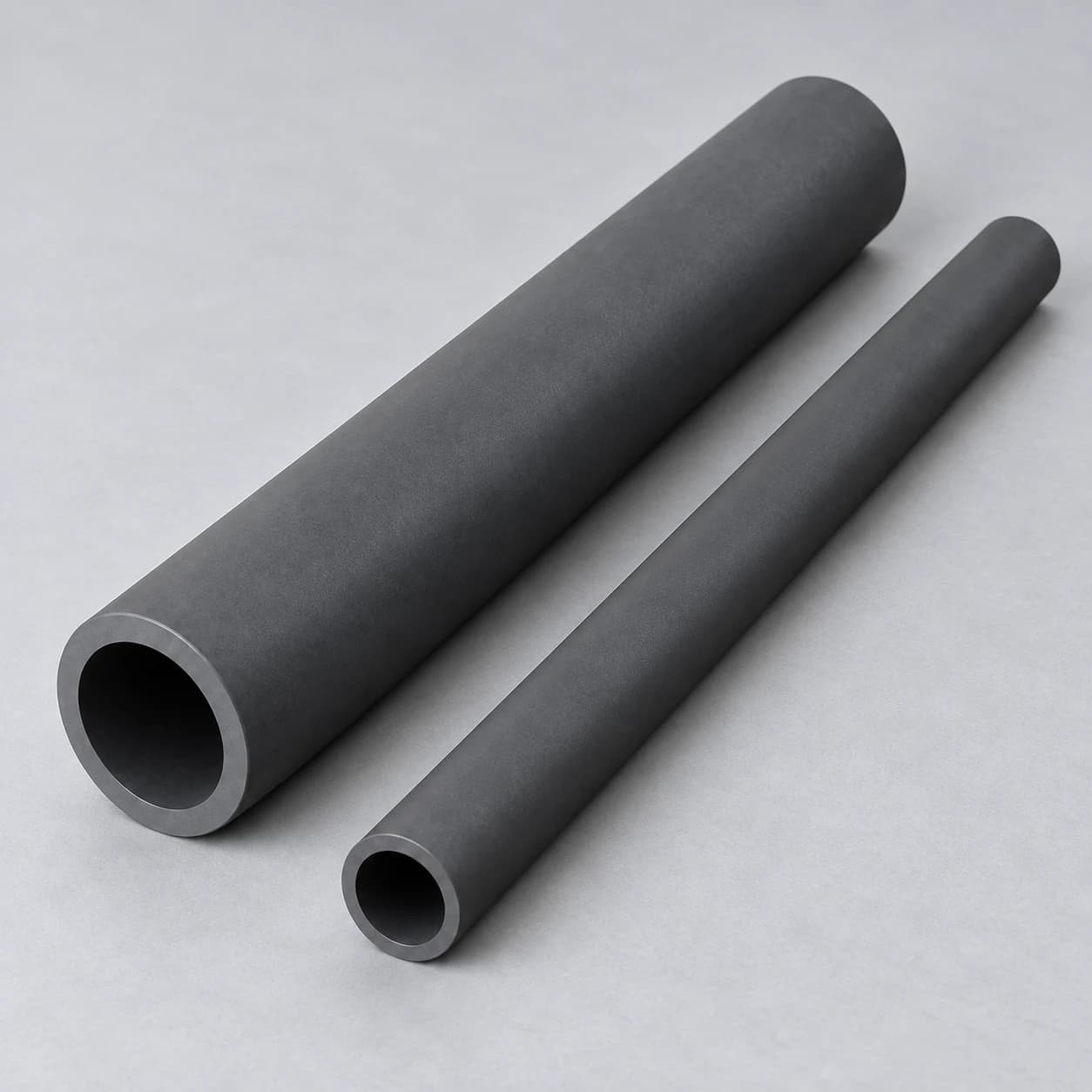
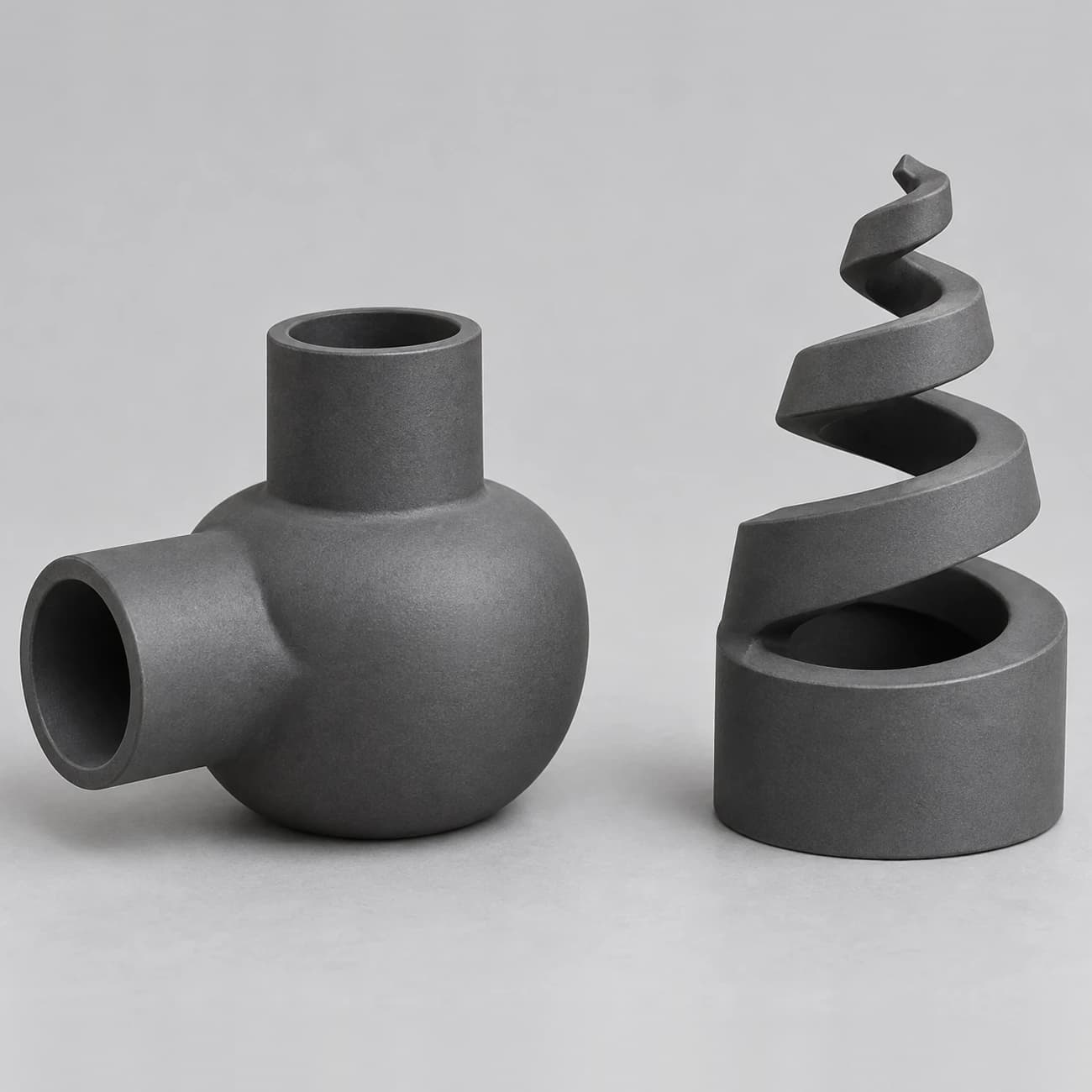
Related Ceramic Products
Explore distinct product requirements and material selections.
Frequently Asked Questions
Can a kiln shelf substitute for a wear plate?
Not on shape alone. A kiln shelf is selected for thermal duty and supported loading; a wear plate must match abrasion, impact, attachment and process exposure. Material route and component design need to match the intended duty.
Is a plate the same as a tray?
A plate is generally a flat component; a tray introduces walls, recesses or containment geometry. State whether the requirement is support, containment or contact, and provide a drawing.
Why are support positions required in an enquiry?
Unsupported span and load distribution affect bending and local stresses. Thickness alone cannot establish capacity without the support and operating conditions.