99.6% Alumina Ceramic Carriers for Power Modules
Ceramic Substrate
SKU: FWM/CS-ALU-011

- Material
- Alumina
- Size
- Custom sizes by drawing
- MOQ
- By quotation
- Applications
- Power Modules
High-purity alumina substrates for electrically insulating power-module carriers and controlled circuit processing.
Browse Products
Alumina Ceramic Products
Zirconia Ceramic Products
Silicon Carbide Products
Silicon Nitride Products
Aluminum Nitride Products
Product Description

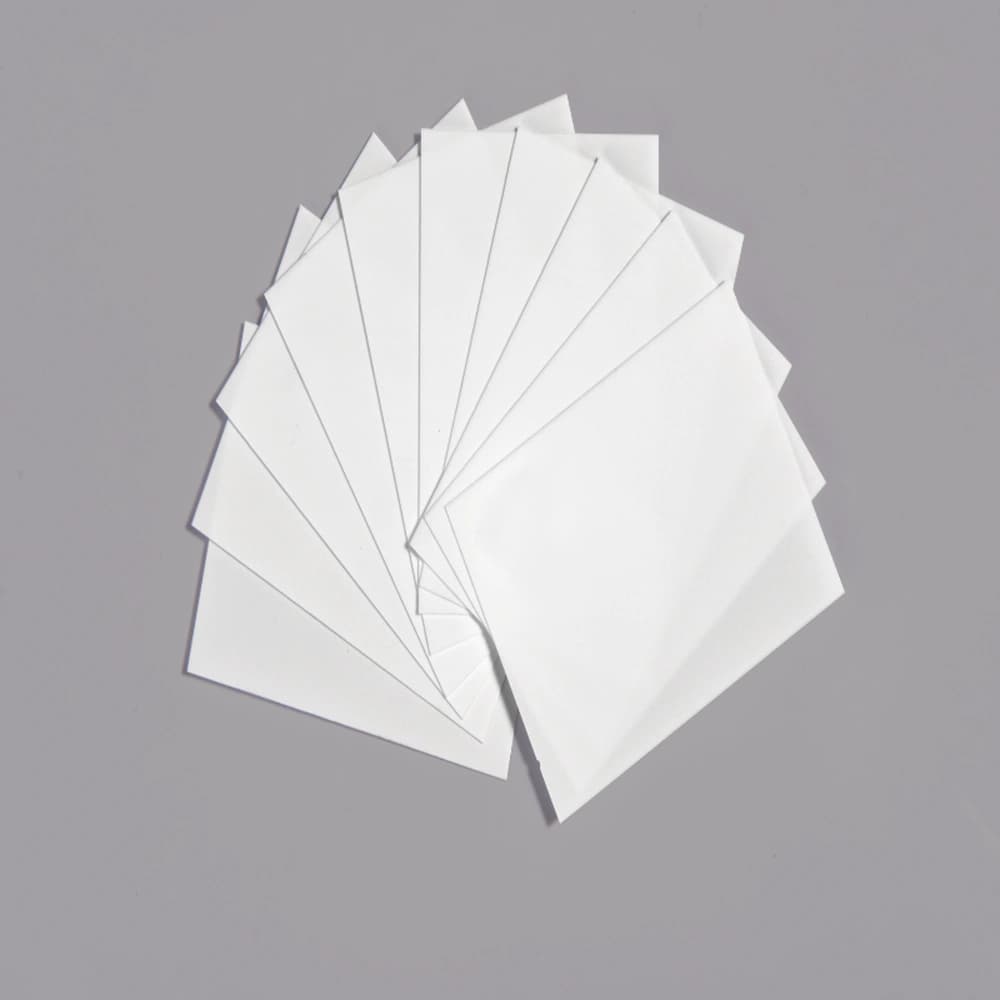
High-purity alumina plates serve as electrically insulating carriers within power-module assemblies.
The ceramic supports the circuit and transfers heat toward the cooling interface without creating an electrical path through the base. Copper circuits and their joining process are specified separately from the bare plate.
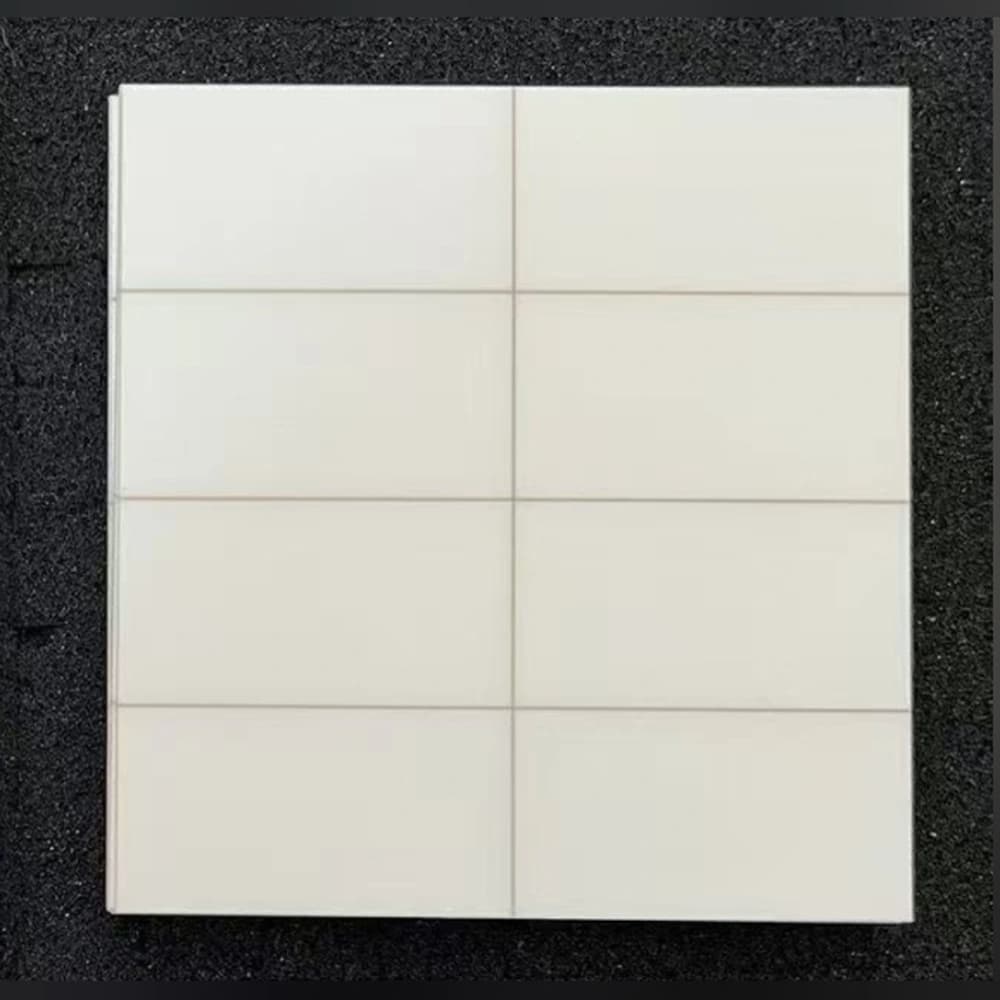
Bare alumina is shown for material and form selection. Purity, dimensions and application qualification cannot be established from appearance.
Product Advantages
- The alumina layer electrically isolates power circuitry from the mounting structure.
- A rigid ceramic plate supports subsequent conductor formation and module assembly.
- The ceramic participates in the heat path toward the cooling interface.
Typical Applications
- Power Modules: bare ceramic plates provide the insulating layer for subsequent circuit construction.
- Industrial Power Electronics: insulating carriers support power-device assemblies.
Technical Data
99.6% Alumina Substrate (710 C) Properties
| Property | 99.6% Al₂O₃ — 710 C | Test conditions / measurement tolerance ±10% |
|---|---|---|
| Density (g/cm³) | ≥3.80 | DIN EN 993-1 |
| Bending strength, σ₀ (MPa) | ≥420 | ASTM C1499-08 |
| Young’s modulus (GPa) | ≥300 | — |
| Thermal conductivity (W/(m·K)) | ≥25 | Room temperature; DIN EN 821-2 |
| Linear thermal expansion coefficient (10⁻⁶/K) | 7–9 | 100–800°C; DIN 51045-1 |
| Specific heat capacity (J/(g·K)) | ≥0.65 | 20°C; DIN EN 821-3 method B |
| Relative permittivity | 8.5–11.5 | Room temperature, 1 MHz |
| Dielectric loss factor | ≤0.010 | Room temperature; 1 MHz; Ra ≤0.4 µm |
| Volume resistivity (Ω·cm) | ≥10¹⁴ | Room temperature; IEC 62631-3 |
| Breakdown strength (kV/mm) | AC≥15; DC≥15 | 20°C; AC / DC |
| Fracture toughness (MPa·m½) | ≥3.0 | Indentation-fracture (IF) |
How to Read the Parameters
- Purity
Composition identifies a material class, not a guaranteed circuit result.
Specify: Grade designation and relevant property report.
- Surface texture
Ra or Rq describes a defined ceramic surface in µm or nm.
Specify: Functional face, measurement method and local defect criteria.
- Flatness and thickness
Flatness, total thickness variation and parallelism describe different geometry.
Specify: Datums, span, support state and measurement method.
- Electrical properties
Volume resistivity uses Ω·cm or Ω·m; insulation resistance uses Ω.
Specify: Temperature, humidity, voltage, electrification time and specimen geometry.
Alumina: material and surface selection
Alumina is an electrically insulating ceramic platform for printed-film, thin-film and package constructions. Purity, surface condition and geometry must be selected for the downstream process; a bare plate is not a completed circuit.
01Define the grade
Select the alumina formulation and the intended film, metallization or assembly route.
02Form and fire
Ceramic forming and firing establish the body; the chosen route must account for shrinkage and the required finished geometry.
03Finish functional features
Where specified, machine or laser-process features and prepare the functional surfaces.
04Inspect the delivered condition
Assess dimensions, surfaces and edge condition against the drawing before later circuit processing.
Application Conditions & Design Review
Define the supplied construction
A bare alumina plate and a copper-metallized power substrate serve different manufacturing stages. State which one is required before discussing attachment, current paths or insulation testing.
Evaluate the assembled heat path
Power-module temperature depends on ceramic thickness, metal geometry, attachment layers and the cooling interface. Select alumina against that complete path rather than a material conductivity value alone.
Film compatibility
Select the grade and surface for the actual resistor, conductor or deposited-film system, not purity alone.
Functional geometry
Identify circuit areas, datums, mounting features and separation edges.
Thermal and electrical role
Balance ceramic thickness, heat transfer and isolation within the completed assembly.
Send With Your Drawing
- Bare or metallized supply state, grade, geometry and thickness.
- Device layout, metal pattern if required, and die-attach/cooling interfaces.
- Operating voltage, thermal loading and the required qualification conditions.
Include the drawing revision, sample and production quantities, and required inspection documents.
Define Acceptance Before Production
- Check ceramic dimensions, functional surfaces and allowable edge defects.
- For the selected assembly, define isolation and thermal/cycling validation separately.
Agree the test methods, sampling plan, acceptance limits and required reports before production.
Available Forms & Processing
Product-specific geometry and processing features.
- 99.6% alumina plate outlines and thicknesses matched to the module footprint.
- Surface condition and flatness defined for subsequent copper bonding or attachment.
- Bare plates kept distinct from DBC or AMB copper-clad assemblies.
Engineering Questions
Does a high-purity alumina plate provide a power-module current rating?
No. Current capability is governed by the conductors, connections, cooling and allowable temperatures. A bare ceramic plate has no circuit current rating.
Is higher-purity alumina always the better substrate?
No. The preferred grade depends on film compatibility, surface condition, geometry and assembly needs. Purity alone does not establish resistor stability or thin-film yield.
Does a hole in alumina provide an electrical via?
No. A hole is a geometric feature until a compatible conductor or metallization structure is specified and qualified.
Packaging & Shipping
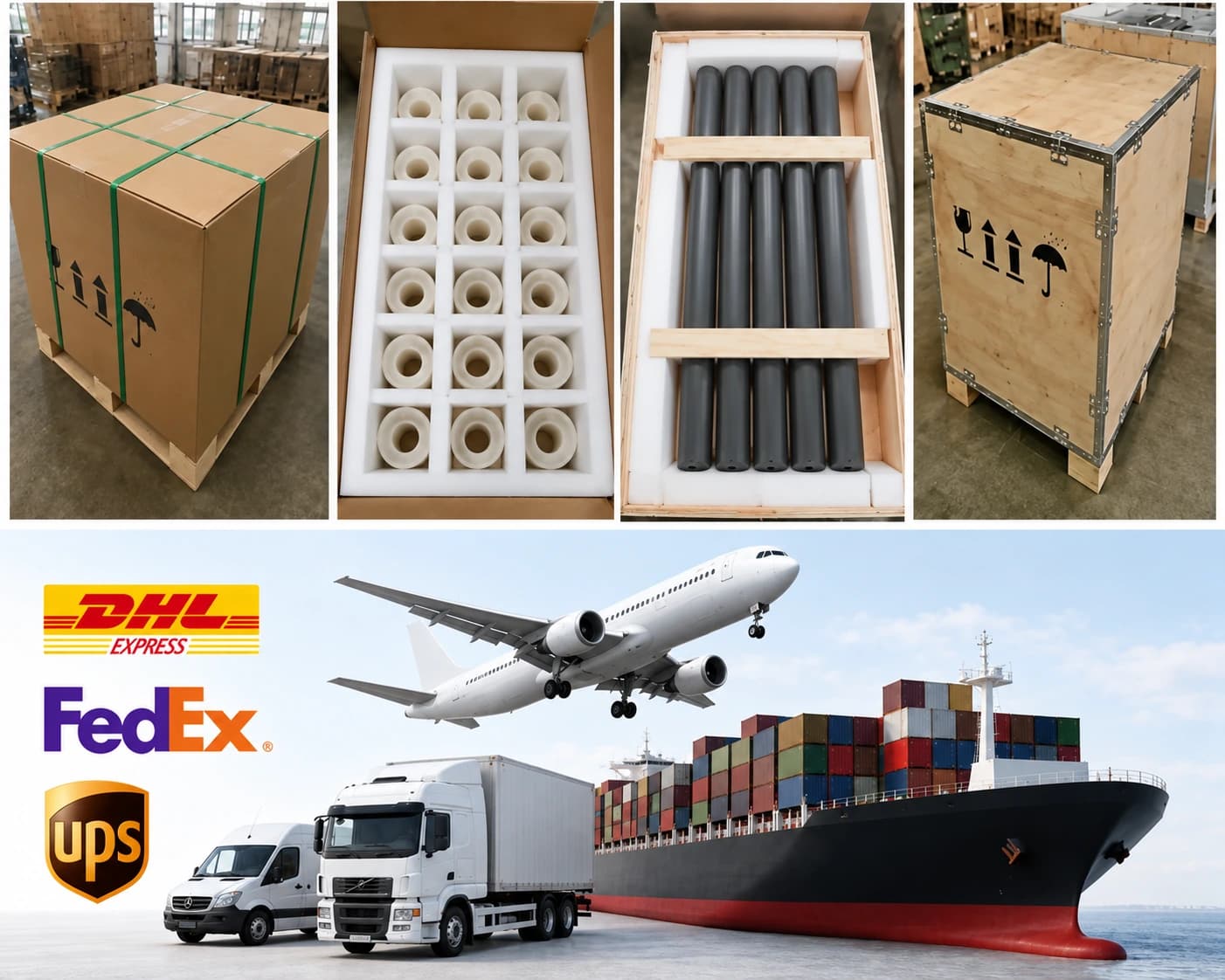
Packaging is selected for substrate finish, quantity and export handling.
| Item | Details |
|---|---|
| Packaging approach | Packaging is selected for substrate finish, quantity and export handling. |
| Protection methods | Individual separation; Anti-scratch interlayers for polished surfaces; Tray or foam protection; Inner box and export carton; Moisture protection where appropriate; Wooden case for larger export consignments when required |
| MOQ reference | By quotation |
| Lead-time references | Quotation inputs: Drawing, material, finish, quantity and delivery destination |
| Payment terms | T/T / Western Union / PayPal; 50% advance payment, 50% balance before shipment |
| Shipping methods | Sea freight / Air freight / Door-to-door courier |
Related Ceramic Substrate Products
Compare related ceramic substrate materials and metallization routes within the same product family.