Bare Aluminum Nitride Ceramic Substrate Plates
Ceramic Substrate
SKU: FWM/CS-ALN-001
- Material
- Aluminum Nitride
- Size
- Custom sizes by drawing
- MOQ
- By quotation
- Applications
- Power Electronics
Bare and drawing-processed AlN substrates for electrically insulated heat spreading in power and optoelectronic assemblies.
Browse Products
Alumina Ceramic Products
Zirconia Ceramic Products
Silicon Carbide Products
Silicon Nitride Products
Aluminum Nitride Products
Product Description

Bare aluminum nitride substrates conduct heat away from electronic devices while electrically isolating their circuits from the mounting structure.
AlN's combination of heat conduction and insulation is useful in power electronics, laser packages and compact thermal-management assemblies. Metallization, circuit formation and device attachment are separate processing stages.
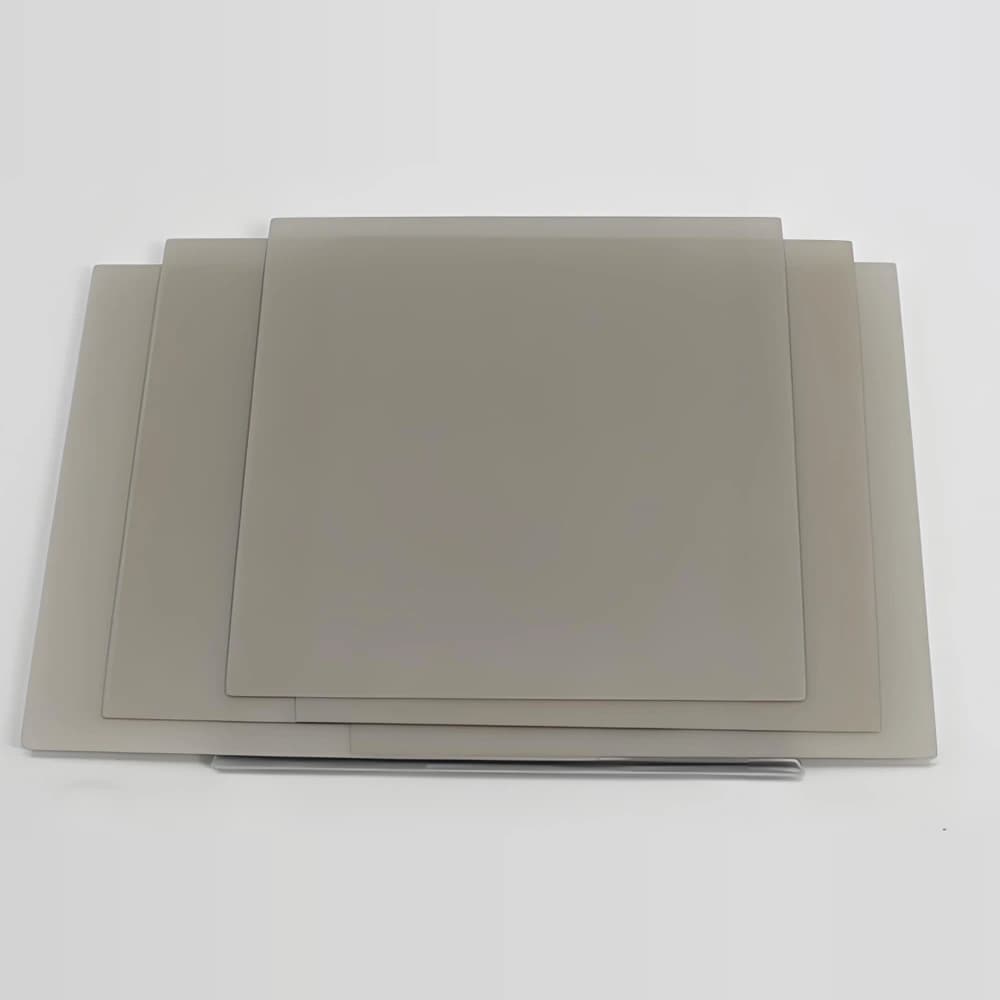
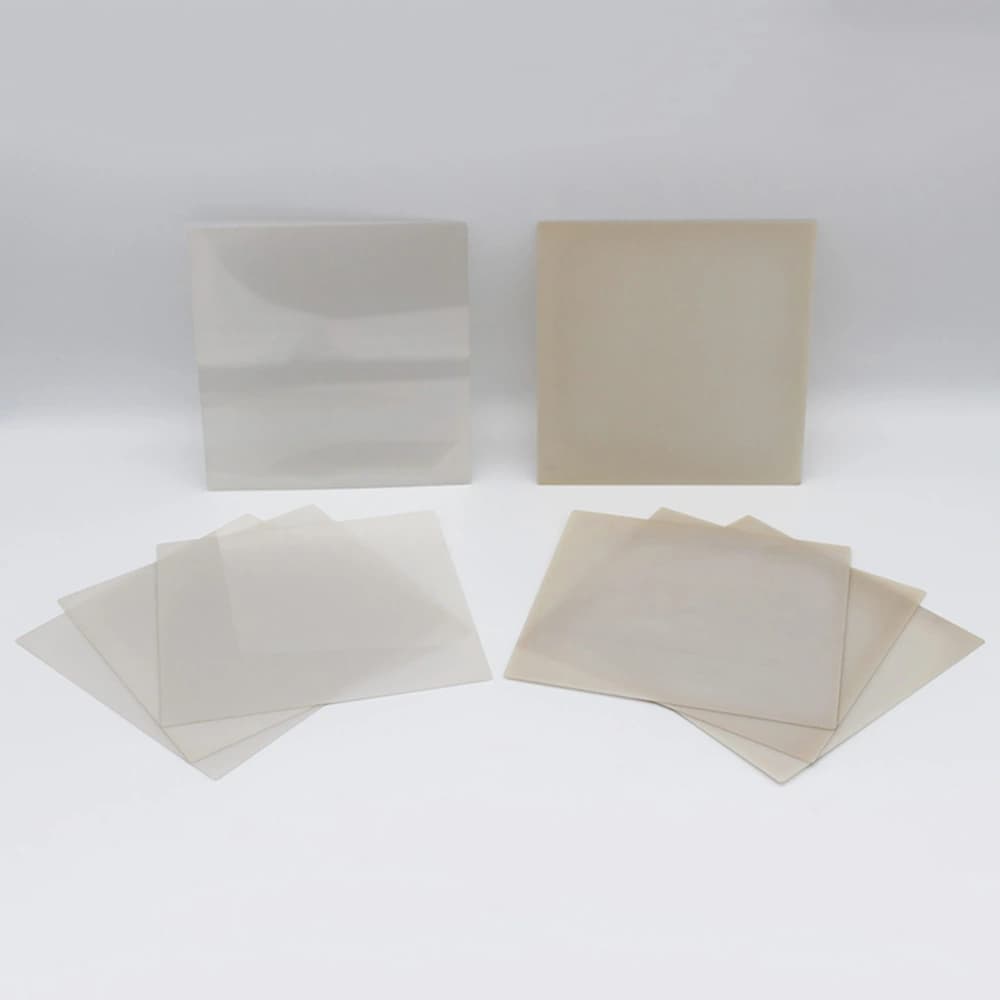
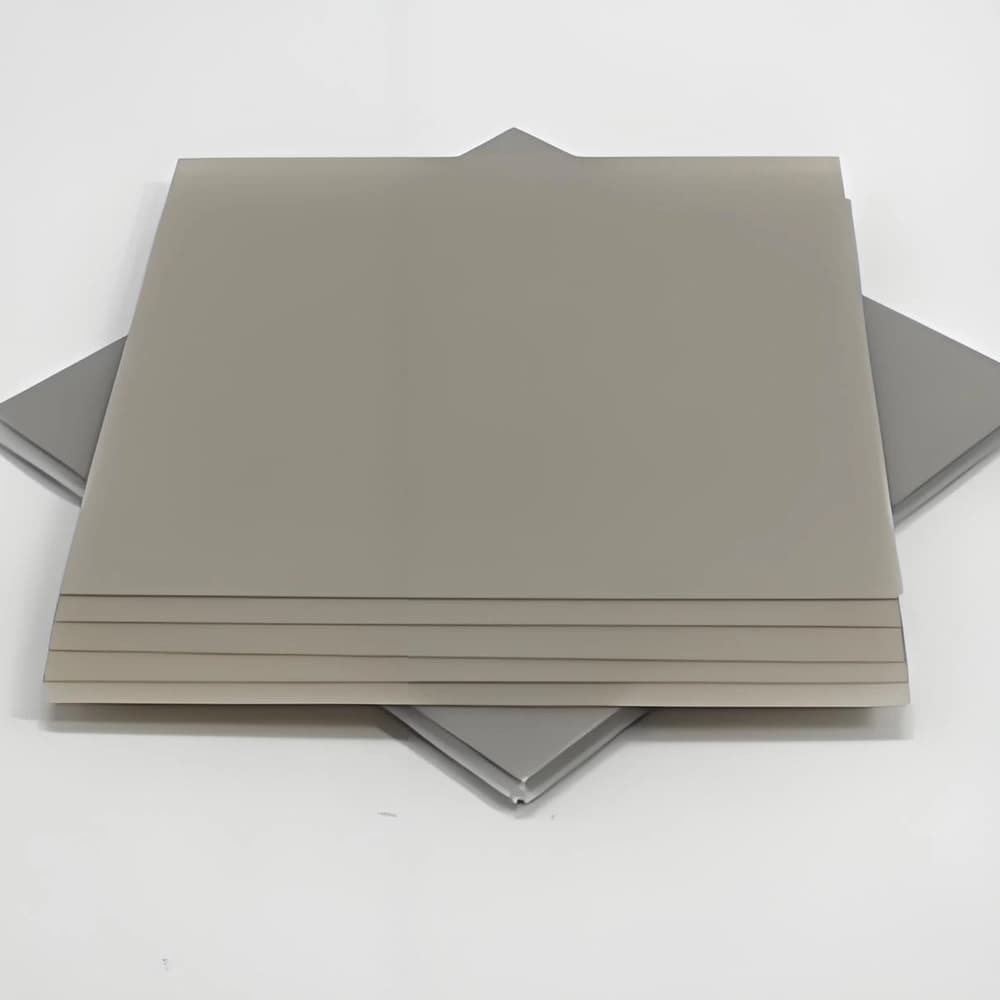
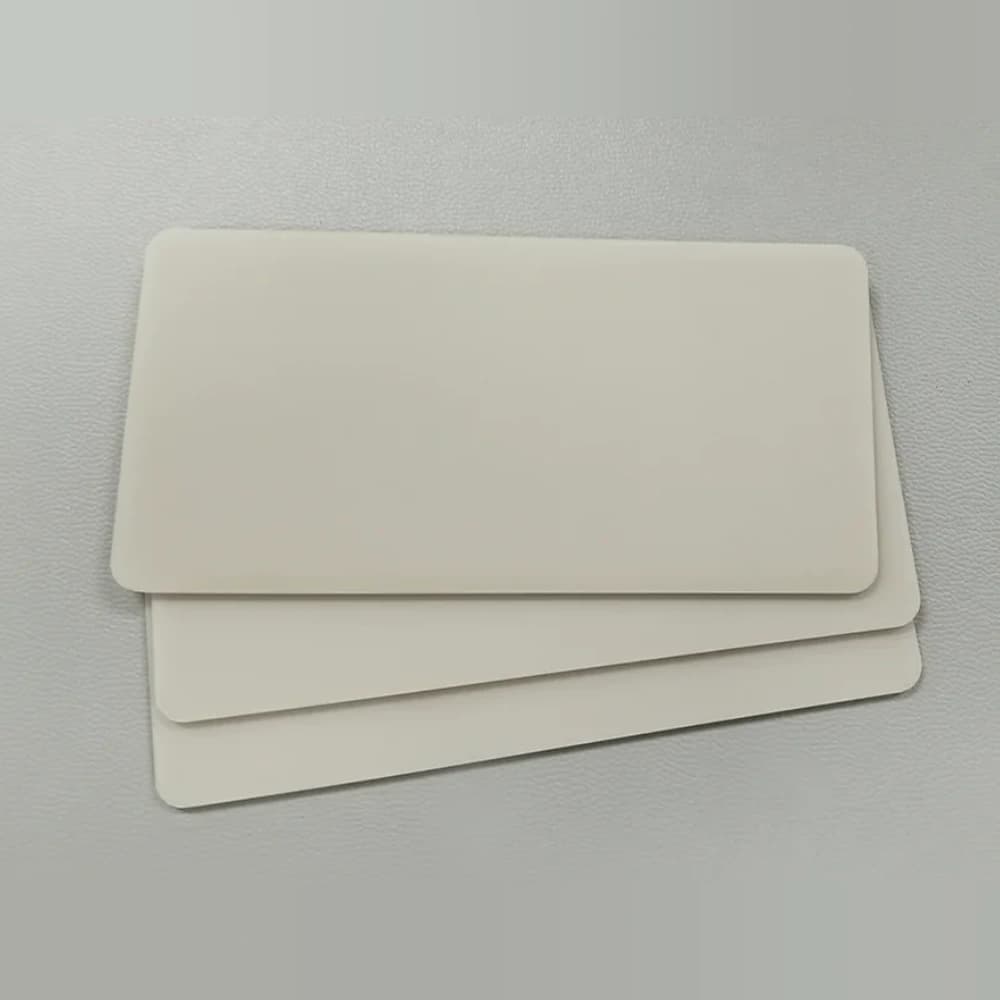
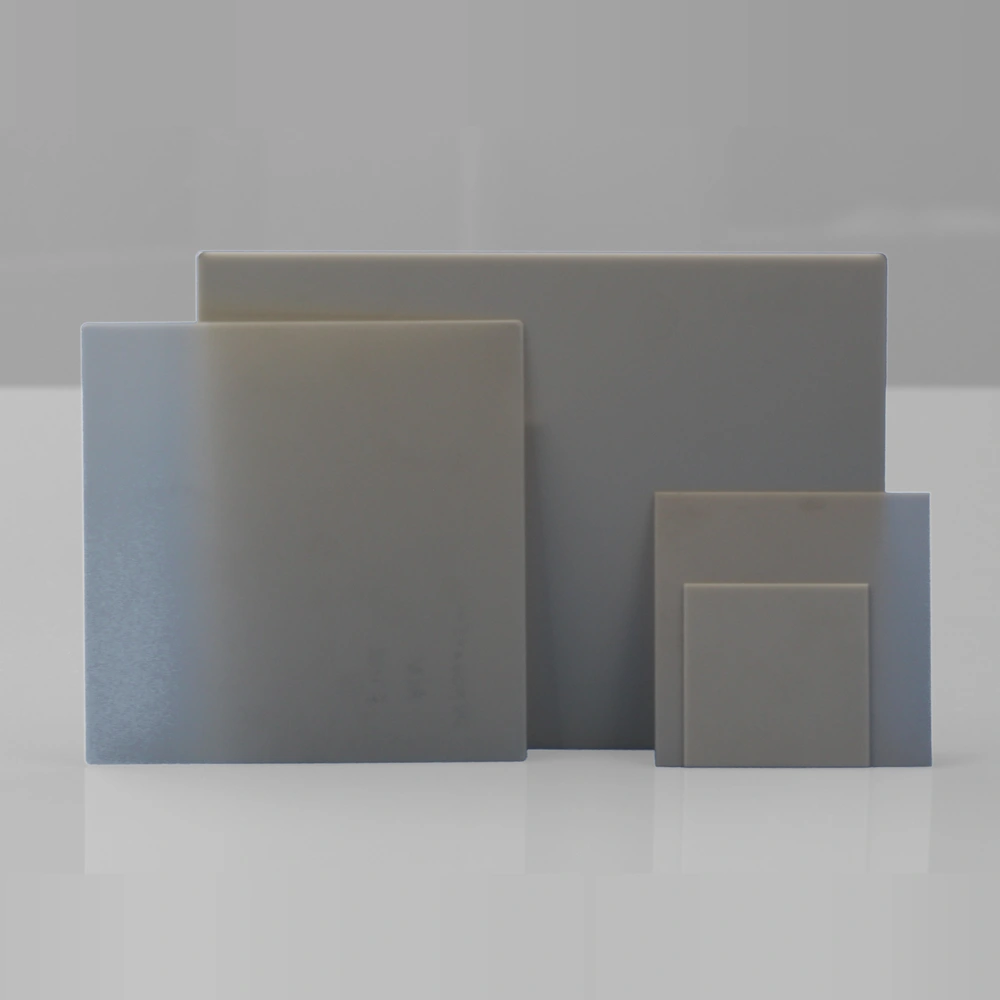
Representative bare AlN forms are shown. The images do not establish material grade, thermal conductivity, dimensions or batch acceptance.
Product Advantages
- AlN combines heat conduction with electrical isolation in one ceramic plate.
- A bare carrier supports different subsequent metallization and attachment routes.
- Plate geometry fits the device footprint and its path to the cooling interface.
Typical Applications
- Power Electronics: electrically insulating plates carry heat toward the mounting structure.
- Thermal Management: bare AlN carriers connect heat-producing devices to subsequent attachment interfaces.
Technical Data
95% AlN Substrate Properties
| Property | 95% AlN typical value | Condition / method |
|---|---|---|
| AlN content (%) | 95 | — |
| Density (g/cm³) | ≥3.3 | — |
| Flexural strength (MPa) | ≥400 | — |
| Thermal conductivity (W/(m·K)) | ≥170 | Room temperature |
| Relative permittivity | 8–10 | 1 MHz; room temperature |
| Dielectric loss tangent | ≤0.0003 | 1 MHz; room temperature |
| Dielectric strength (kV/mm) | 17 | — |
| Volume resistivity (Ω·cm) | ≥10¹⁴ | — |
How to Read the Parameters
- Thermal conductivity
A ceramic property in W/(m·K), not a complete-stack rating.
Specify: Grade, temperature, direction where relevant and method.
- Thermal resistance
A defined heat-path result in K/W.
Specify: Heat-source area, layer dimensions, interfaces and cooling boundary.
- Thermal expansion
CTE is expressed in ppm/K or ×10⁻⁶/K over an interval.
Specify: Temperature interval and whether the value describes ceramic or the effective stack.
- Surface and geometry
A high-conductivity grade does not determine roughness or flatness.
Specify: Functional faces, thickness variation and dimensional acceptance separately.
AlN: an insulating thermal path
Aluminum nitride is considered when ceramic heat transfer is a major constraint. Its bulk conductivity must be distinguished from the thermal resistance of the finished substrate and module.
01Define the thermal requirement
Identify the heat-source footprint, temperature target, cooling interface and intended conductor system.
02Select the AlN grade
Review ceramic conductivity and other material properties at the relevant conditions.
03Prepare the specified form
Choose the delivered bare, machined or surface-finished condition for subsequent processing.
04Validate the interfaces
Evaluate film or metallization compatibility, attachment and cooling interfaces as part of the full construction.
Application Conditions & Design Review
Choose the heat-transfer geometry
AlN is used when electrical insulation and heat transfer are both important. Thickness and active heat-transfer area still matter, so material selection must be tied to the physical assembly.
Specify the delivery state
An as-fired, ground or polished plate may enter different downstream processes. Identify whether the next step is film deposition, printed circuitry, copper bonding or direct package assembly.
Heat path
Include ceramic thickness, copper, attachment layers and contact area in the thermal assessment.
Downstream process
Identify deposited films or printed pastes, firing atmosphere and chemical exposures before selecting the surface.
Finished delivery state
Distinguish an as-fired blank from a polished plate or an already metallized substrate.
Send With Your Drawing
- AlN grade requirement, finished outline, thickness and critical surface geometry.
- Intended finish and any holes, slots or separation features.
- Subsequent metallization/attachment process and operating/test conditions.
Include the drawing revision, sample and production quantities, and required inspection documents.
Define Acceptance Before Production
- Verify agreed material identification, dimensions and functional-surface criteria.
- Qualify cleaning, metallization and attachment compatibility on the selected construction.
Agree the test methods, sampling plan, acceptance limits and required reports before production.
Available Forms & Processing
Product-specific geometry and processing features.
- Bare AlN plates with drawing-defined outline and thickness.
- Standard surface condition or selected finishing for the downstream process.
- Optional holes, slots and cut-outs treated separately from circuit metallization.
Engineering Questions
Is thermal conductivity the same as substrate thermal resistance?
No. Conductivity is a material property; thermal resistance also depends on thickness, area and interfaces. Use the actual geometry and boundary conditions for thermal design.
Does high AlN conductivity guarantee a cooler module?
No. The benefit depends on ceramic thickness, heat-source area, attachment layers and heat rejection. Evaluate the complete heat path.
Can an alumina film process be transferred directly to AlN?
Not without review. Confirm that the paste or deposited stack, atmosphere, thermal cycle and cleaning chemistry are compatible with the selected AlN system.
Packaging & Shipping
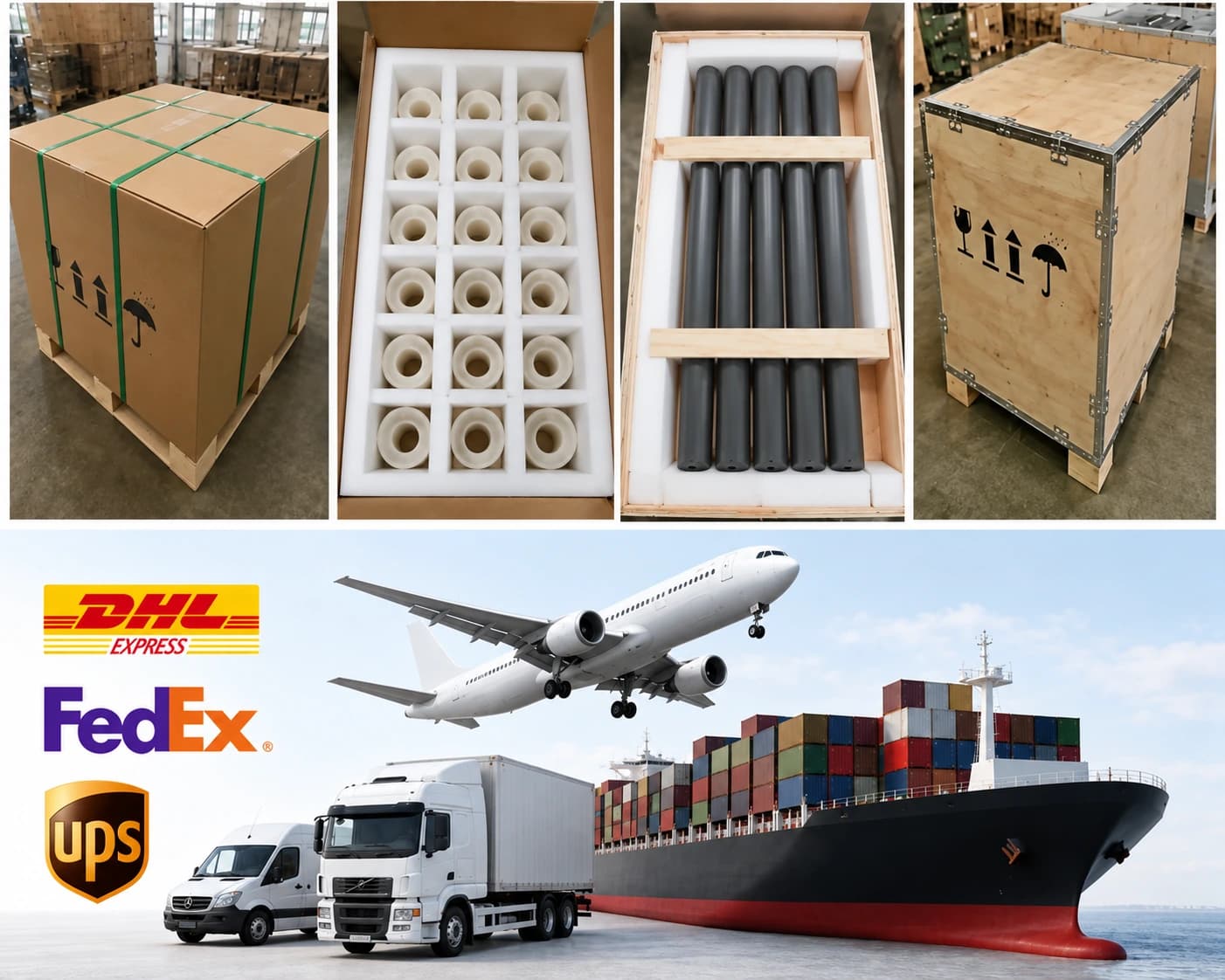
AlN substrates receive individual separation and surface protection appropriate to the finish.
| Item | Details |
|---|---|
| Packaging approach | AlN substrates receive individual separation and surface protection appropriate to the finish. |
| Protection methods | Individual separation; Anti-scratch interlayers; Rigid trays or foam protection; Moisture protection where appropriate; Inner box and export carton; Wooden case when required |
| MOQ reference | By quotation |
| Lead-time references | Quotation inputs: Drawing, material, finish, quantity and delivery destination |
| Payment terms | T/T / Western Union / PayPal; 50% advance payment, 50% balance before shipment |
| Shipping methods | Sea freight / Air freight / Door-to-door courier |
Related Ceramic Substrate Products
Compare related ceramic substrate materials and metallization routes within the same product family.